What Does a Perfect 5 Days in Chengdu Look Like? Pandas, Teahouses and Sichuan Food (2026)
Published 2026-09-14 · Updated 2026-10-26 · Itineraries
TL;DR
A: Five days splits Chengdu cleanly: Day 1 old-town culture (Wenshu Monastery, Kuanzhai Alley, a Sichuan-opera face-changing show), Day 2 the panda base at 7:30 am plus the east-side museums, Day 3 the Chunxi Road/Taikoo Li shopping core, Day 4 poetry and Three Kingdoms (Dufu's cottage, Jinli, Wuhou Shrine), Day 5 the UNESCO west line (Dujiangyan + Qingcheng Mountain). Metro everywhere, book the panda base ahead in peak season, and arrive hungry.
What’s the short answer?
Chengdu rewards a slow pace — but only if the logistics are right. This route clusters each day in one area so you never backtrack: Day 1 the northern old town, Day 2 the panda base and east-side industrial district, Day 3 the Chunxi Road core, Day 4 the west-of-center poetry belt, Day 5 a day trip to Dujiangyan and Qingcheng Mountain. Everything runs on the metro (fares start at ¥2), the food ranges from street snacks to full Sichuan banquets, and the panda base — the reason half of visitors come — is doable properly if you arrive at the 7:30 am opening.
Day 1 — What’s in Chengdu’s old town? (monasteries, alleys and face-changing)
| Time | Stop | Notes |
|---|---|---|
| Morning | Wenshu Monastery | A pocket of calm in the city — red walls, ancient trees, free incense at the gate. The best “Eastern aesthetics” photos in Chengdu |
| Afternoon | Sichuan Opera House (Yandai Lane) | The Furong Guocui show: face-changing (bianlian), fire-spitting, rolling lamps and hand-shadow puppets, with 3D stage effects. Ticket includes a covered-bowl tea |
| Afternoon | Chengdu Museum | A beautifully designed building walking through Chengdu’s whole story, from ancient stone to folk life. The top-floor viewing deck looks straight down on Tianfu Square — reserve ahead in peak season |
| Late afternoon | Kuanzhai Alley | The postcard old Chengdu: grey-brick courtyards converted into tea houses and boutique shops, the lazy street vibe intact |
| Evening | Kuixinglou Street | Where local foodies actually eat — one street of noodles, maocai, grilled pig brain and egg cakes. Arrive hungry, eat street to street |
Wenshu Monastery → opera house is a 2.7 km hop; the museum → Kuanzhai Alley walk is 1.2 km; Kuanzhai Alley → Kuixinglou is 50 m. The whole day chains together on foot.
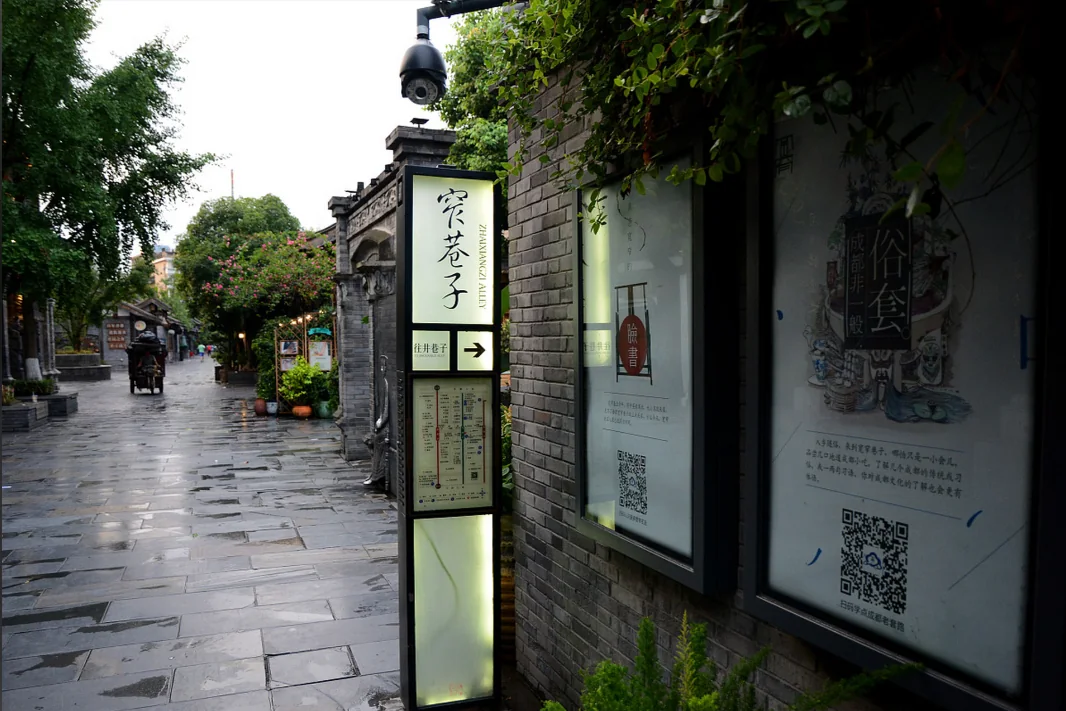
If Day 1 has a second theme after the opera, it’s tea: the show ticket includes a covered-bowl, Kuanzhai’s courtyards pour it, and half the lane signs advertise it.
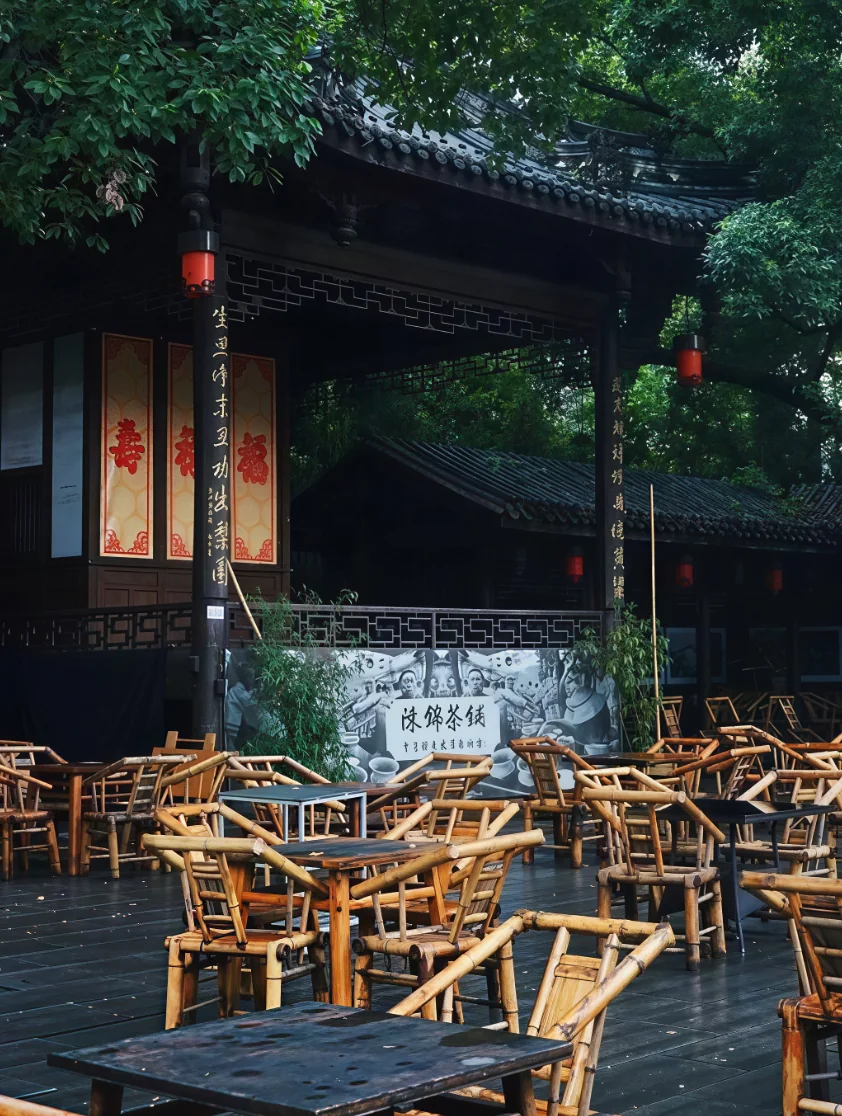
Day 2 — How do you see the pandas, and what’s on the east side?
| Time | Stop | Notes |
|---|---|---|
| 7:30 am | Chengdu Research Base of Giant Panda Breeding | Be at the gate when it opens. The pandas eat and climb until roughly 11 am, then sleep — late arrivals see furry backs only |
| Midday | Chengdu Zoo | Next door: big cats and primates, plus a strong bird and reptile collection, well-shaded and easy to wander for half a day |
| Afternoon | Chengdu Natural History Museum | The building looks like a giant boulder; inside are dinosaur fossils and uncannily lifelike animal specimens — kids and adults both love it |
| Late afternoon | Erxianqiao | The artsy block that a song made famous: little commerce, old red-brick houses and street-art walls — a time-slip feeling |
| Evening | Dongjiao Memory (Eastern Suburb Memory) | A converted old factory: giant chimneys, rusted pipes, streetwear shops and galleries. The night vibe is best — livehouse gigs most evenings |
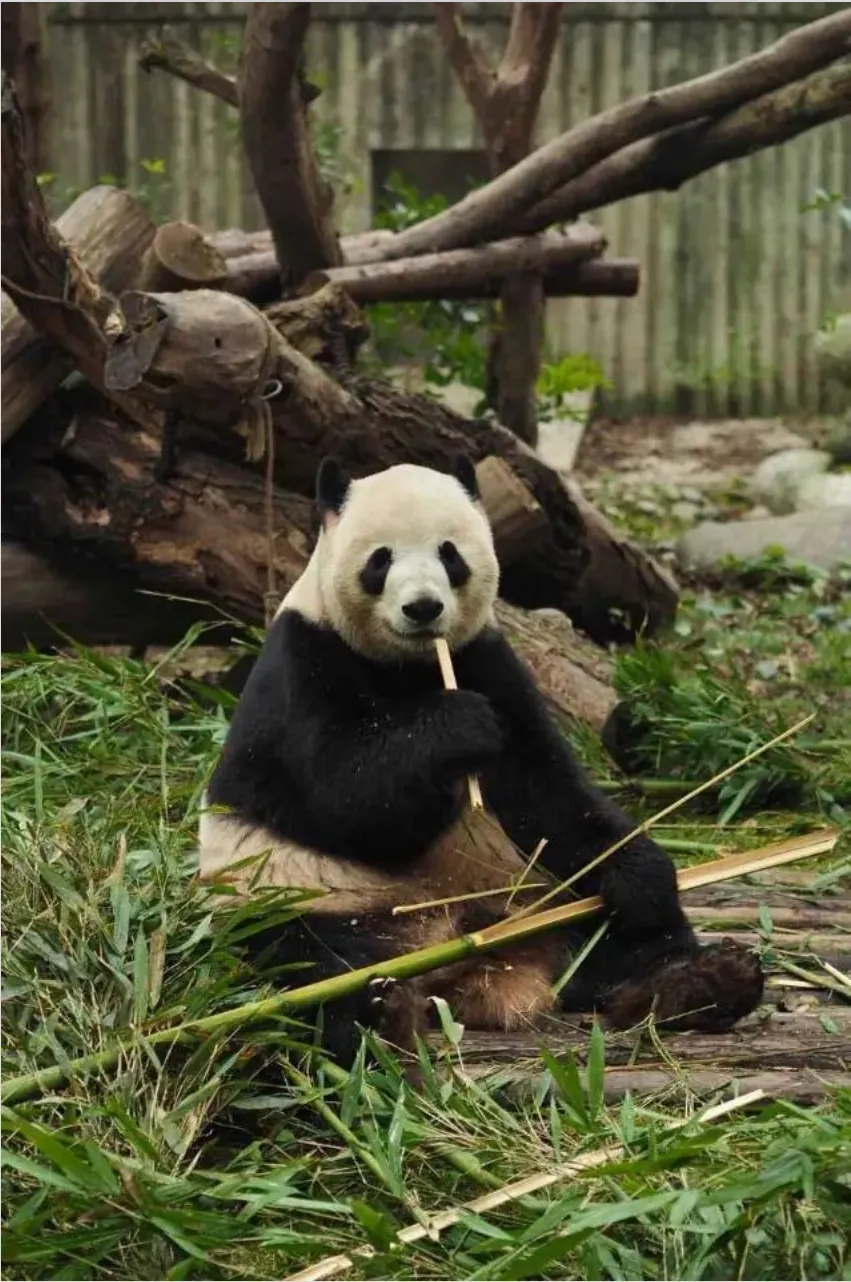
The panda base walking route (enter South Gate). Most enclosures cluster in the south: Villa No. 6 — home of Hua Hua, the internet-famous panda — then Villa No. 7, then the Panda Planet Light & Shadow Hall. Loop onward to the Panda Walk (rest, shopping, food), the Moon Nursery (cubs of different ages), the Red Panda Nursery and Sun Nursery (mother pandas rearing cubs), then the Star Nursery (newborns with keepers) and the Xinghan and Yunyue halls. Boardwalks link every enclosure; walking gaps run 3–15 minutes. Exit through the West Gate and adjust the order to your energy.
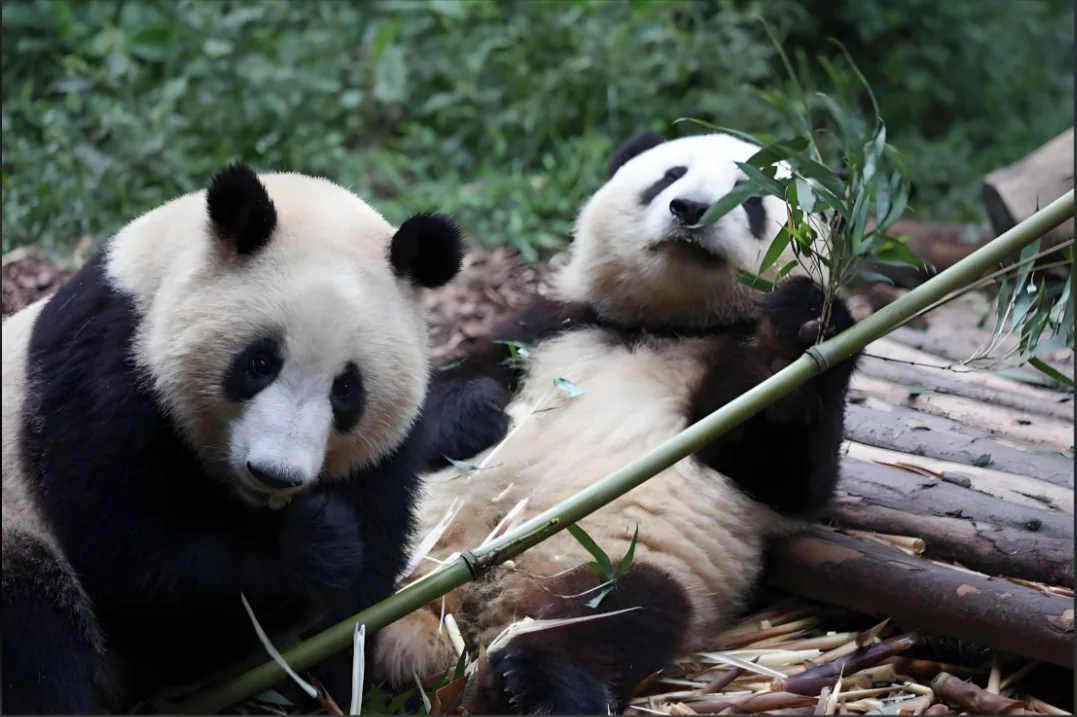
Day 3 — What clusters around Chunxi Road? (riverside, temples and shopping)
| Time | Stop | Notes |
|---|---|---|
| Morning | Wangping Street | A restored riverside lane on the Jinjiang — riverside cafés and small bars, perfect for a slow morning coffee |
| Midday | Taikoo Li | Ancient Daci Temple on one side, flagship stores on the other; rest in the lane cafés and watch the street fashion |
| Midday | Daci Temple | The thousand-year-old temple hidden inside the shopping district — red walls, bamboo shadows, famous covered-bowl tea. Loud outside, silent inside |
| Afternoon | IFS Tower | The famous climbing panda on the roof. Take the elevator to the 7th-floor terrace to meet it face to face; the mall itself is a full bad-weather backup |
| Evening | Chunxi Road | The neon artery: snacks, department stores, street crowds — Chengdu’s bustle distilled, plus souvenir shopping |
All five stops sit within a 900 m radius — this is the day to log 15,000 steps.
Day 4 — What are the poetry and Three Kingdoms sights?
| Time | Stop | Notes |
|---|---|---|
| Morning | Dufu Thatched Cottage | The poet’s riverside home: bamboo groves, thatched roofs and garden corners steeped in bookish atmosphere. A pure walk-and-breathe stop |
| Midday | Huanhuaxi Park | Right next door — one of Chengdu’s biggest open urban forests, with streams, reed ponds and herons. Row a boat or just stroll |
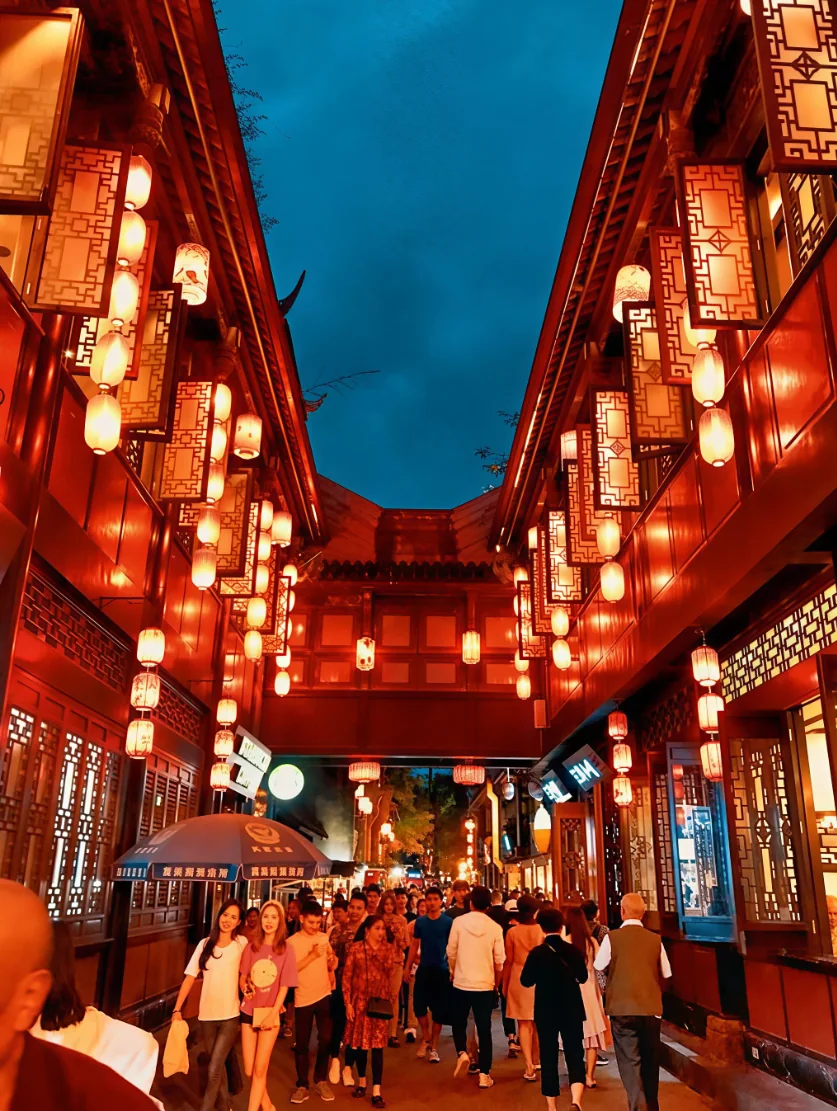
| Afternoon | Jinli Ancient Street | Red lanterns overhead at dusk, tea houses and snack stalls in every direction — the closest thing to walking into an ancient night market |
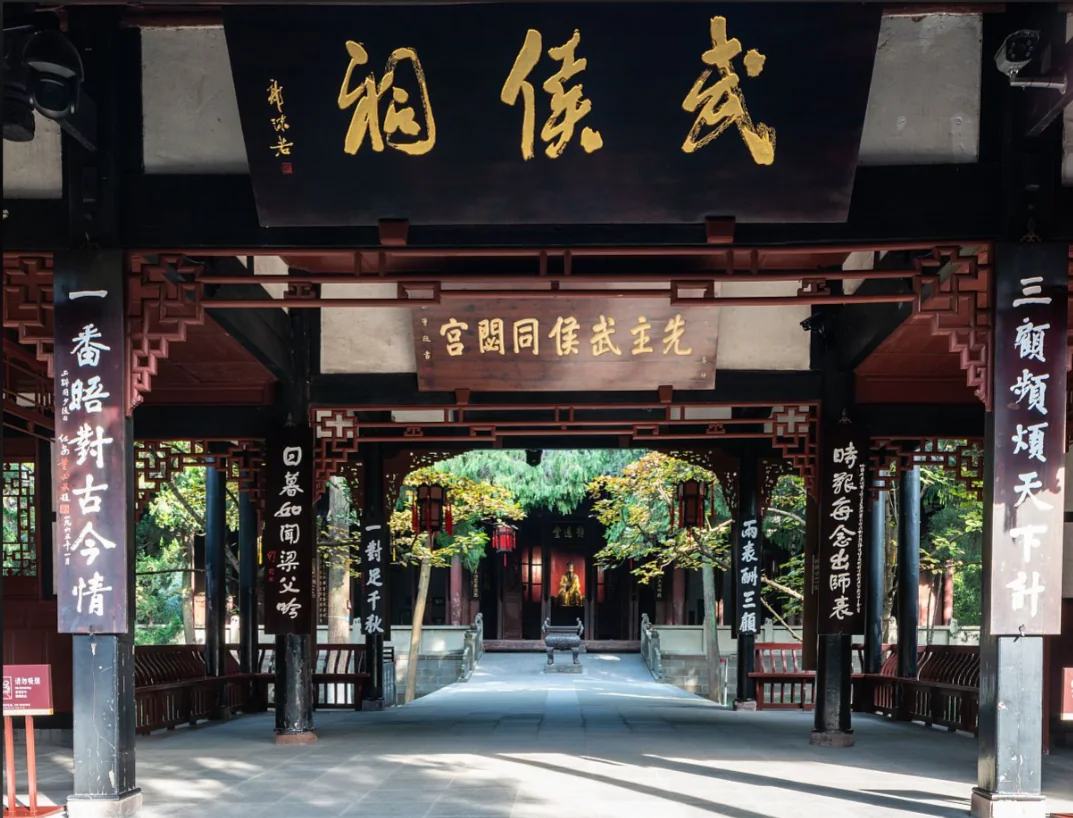
| Late afternoon | Wuhou Shrine | The Three Kingdoms pilgrimage site: red-wall bamboo corridor (the most-photographed frame in Chengdu), Zhuge Liang and Liu Bei statues, ancient steles and cypresses |
| Evening | Yulin West Road | The street from the song “Chengdu”: no big sights, just small bars, cafés and folk-music nights — the city’s tipsy, gentle side |
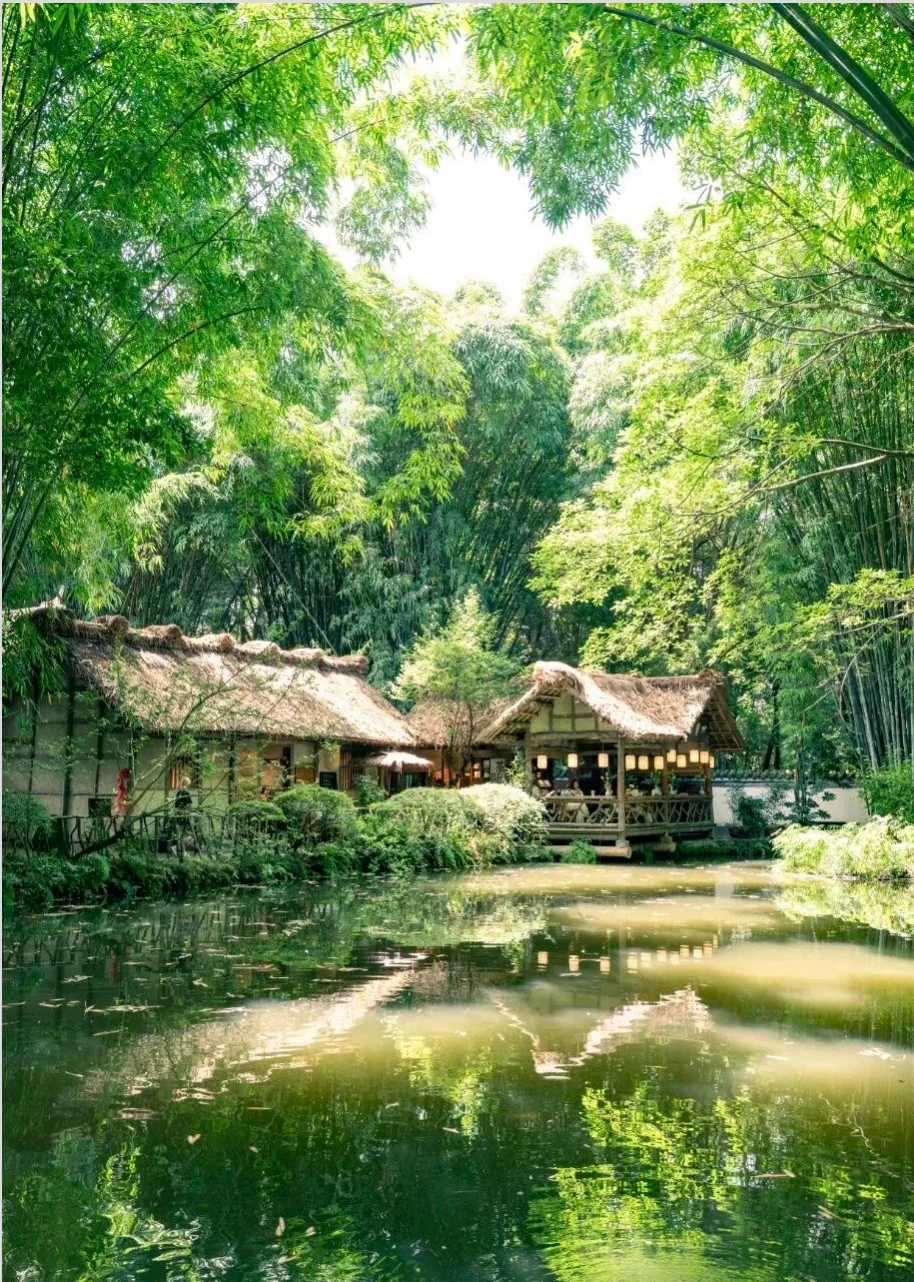
Photo tip: the famous Wuhou Shrine red wall photographs beautifully from outside the wall for free — the light through the bamboo is the same, and you skip the ticket line.
Stay at Jinli into the evening: once the red lanterns come on, the snack stalls and teahouses turn the street into the closest thing Chengdu has to an ancient night market.
Day 5 — What’s on the UNESCO west line? (Dujiangyan + Qingcheng Mountain)
| Time | Stop | Notes |
|---|---|---|
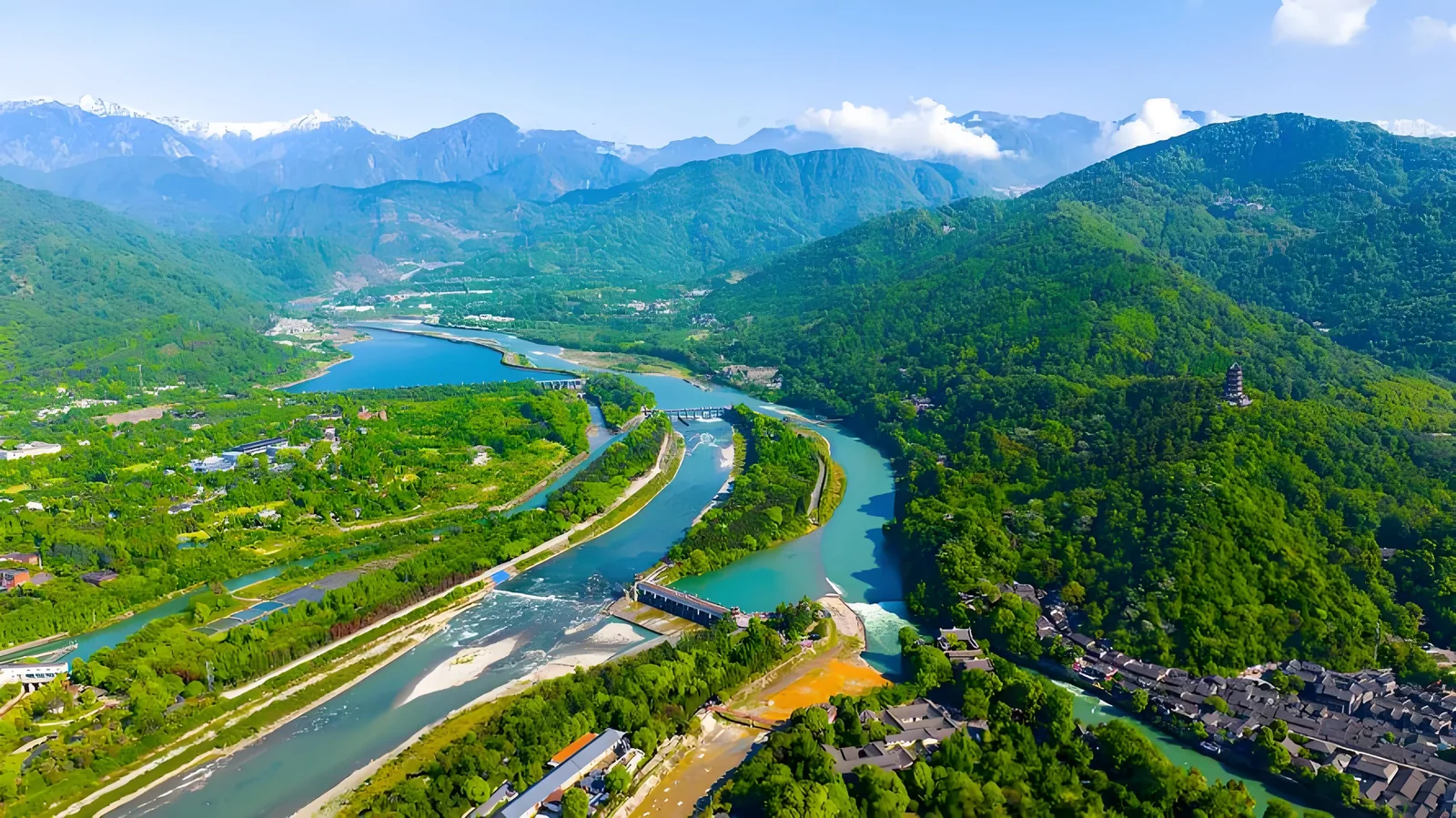
| Morning | Dujiangyan Irrigation System | Li Bing’s 2,200-year-old water works, still irrigating the plain today. Stand on the Fish Levee as the Min River surges past, then descend from Qinyan Tower for the full engineering panorama |
| Midday | Dujiangyan Panda Valley | Smaller crowds than the city base, wilder setting: pandas up close, occasionally red pandas ambling past, air so clean it feels like an activity in itself |
| Afternoon | Qingcheng Mountain | A Taoist mountain of ancient trees and quiet temples. Front mountain for the cultural sights, back mountain for nature. Birdsong, streams, negative ions — the fatigue washes off |
Chengdu West Station runs trains toward Dujiangyan and Qingchengshan (or base yourself near Chadianzi). Wear grippy sneakers — the mountain paths stay damp, and slick soles are the #1 tourist injury here.
How do you get around Chengdu?
Metro plus shared bike — rush-hour jams are real and old-town parking will ruin your mood. The options:
- Metro — fares from ¥2 (4 km), covers most sights. Lines 2/3 cross at Chunxi Road; Line 4 serves Kuanzhai Alley and Dufu Cottage; Line 7 loops the city.
- Buses — ¥2 flat, but surface traffic jams at rush hour.
- Ride-hailing (Didi) — best for groups or big luggage; solo travelers in the old town will find the metro faster.
- Shared bikes — ideal for 1–2 km hops around Wangping Street, Kuixinglou and Yulin; park in marked zones.
- From the airports: Shuangliu (CTU) is 16 km out with Line 10 straight downtown — best if you travel light. Tianfu (TFU) is 50 km out on Line 18 — book a car if there are several of you. Double-check which airport your ticket uses; mixing them up is the classic Chengdu mistake.
- From the train stations: Chengdu East (most high-speed trains, Lines 2/7) puts you near Dongjiao Memory and the panda base side; Chengdu West (Lines 4/9) points at Dujiangyan/Qingchengshan; Chengdu South (Lines 1/7/18) sits near Taikoo Li.
Where should you stay in Chengdu?
Chunxi Road / Taikoo Li for first-timers; Kuanzhai Alley for the most “old Chengdu” sleep. The full table:
| Area | Best for | Vibe |
|---|---|---|
| Chunxi Road / Taikoo Li | First-timers, shoppers | Steps from IFS’s climbing panda, Metro 2+3 interchange, endless hotels and guesthouses |
| Kuanzhai Alley / People’s Park | Slow-travel lovers | Old courtyard guesthouses, morning covered-bowl tea and ear-cleaning, the most “old Chengdu” sleep |
| Wuhou Shrine / Jinli | Families | Antique-styled inns — sightsee Jinli all day and duck back to the room in minutes |
| Chadianzi | West-line planners | Near metro toward Xipu’s high-speed trains to Dujiangyan/Qingchengshan; quiet, mid-range prices, skips the cross-city trek |
| South Railway Station | Late arrivals | Lines 1/7/18 interchange, newer hotels — convenient for awkward arrival times and airport runs |
See hotels near Kuanzhai Alley / Chunxi Road →
What are the local tips that matter?
Carry an umbrella, get to the pandas by 7:30, and reserve ahead in peak season. All ten:
- Carry a sun-and-rain umbrella. Chengdu summers are muggy; the sun burns and the showers arrive without warning.
- Panda base: do not sleep in. Be there at the 7:30 opening — well-fed pandas nap by midday.
- Reserve ahead in peak season for the Chengdu Museum and the panda base, or you’ll arrive to “sold out”.
- Metro plus shared bike beats taxis. Rush-hour jams are real, and old-town parking will ruin your mood.
- The Wuhou Shrine red wall is photographable free from outside. Same light, no ticket.
- Sunscreen even when it’s overcast — the UV here is stronger than the grey sky suggests.
- Pandas are most active 9–11 am. After that you’re photographing sleep.
- Watch the route in taxis — occasionally a driver takes the scenic route; speak up immediately.
- Pack quick-dry clothes. Humidity means cotton never dries overnight.
- Grippy sneakers for Qingcheng Mountain and Dujiangyan — wet stone paths, no exceptions.
What should you eat in Chengdu?
Mapo tofu, dandan noodles, Zhong shuijiao dumplings, huiguorou twice-cooked pork and fuqi feipian — then go where locals go. Chengdu is the source of every “Sichuan” flavor you know. The short version: order mapo tofu, dandan noodles, Zhong shuijiao dumplings, huiguorou twice-cooked pork and fuqi feipian first, then go where locals go — an open-kitchen home-style canteen (Ronghe Mama Cai’s Yuanda branch), the fresh-fish hotpot on the airport road (Youmingtang’s Shuangliu branch, fish butchered and sliced to order), and a century-old rural teahouse for covered-bowl tea (Pengzhen Guanyin’ge, where the long-spout pour is part of the show). Can’t handle the burn? Order the yuanyang divided pot.
The full dish-by-dish breakdown, the four places locals actually recommend, and hotpot spice-survival tactics live in our Chengdu food guide. If you only remember one street from this itinerary, make it Kuixinglou Street on Day 1 — that’s where the eating trip within the trip starts.
Practical facts checked against official sources
- Chengdu Research Base of Giant Panda Breeding — opening hours, ticket and reservation rules: panda.org.cn
- Chengdu Metro — lines, fares, airport links: chengdurail.com
Common questions
How many days do you need in Chengdu? Is 5 days too long?
Five days is the sweet spot: Days 1–4 cover the city itself (old-town lanes and the Sichuan-opera show, the panda base plus east-side museums, the Chunxi Road/Taikoo Li core, and the Dufu Cottage–Jinli–Wuhou Shrine belt), and Day 5 runs the UNESCO day trip to Dujiangyan and Qingcheng Mountain. Three days works if you drop the west-line day trip; anything under two days sacrifices the panda base, which is Chengdu's headline sight.
What is the best time to visit the Chengdu panda base?
Arrive at the 7:30 am opening — pandas feed and climb until roughly 11 am, are most active between 9 and 11 am, and sleep through the afternoon, so late visitors see little more than furry backs. The base requires advance reservation in peak season (book via the official WeChat account or Trip.com), and weekdays are noticeably quieter than weekends.
How do I see Hua Hua the panda at the Chengdu base? Which walking route?
Enter through the South Gate, where most enclosures cluster: Hua Hua, the internet-famous panda, lives in Villa No. 6, followed by Villa No. 7 and the Panda Planet Light & Shadow Hall. Continue past the Panda Walk to the Moon Nursery (cubs), the Red Panda and Sun nurseries, then the Star Nursery and the Xinghan/Yunyue halls, exiting via the West Gate — boardwalks connect every stop with 3–15 minute walks between them.
Where should I stay in Chengdu?
First-timers should pick Chunxi Road/Taikoo Li: Metro Lines 2 and 3 cross there, hotels are plentiful, and the IFS panda, Daci Temple and street food are all walkable. Kuanzhai Alley/People's Park suits slow travelers who want converted courtyard guesthouses; Wuhou Shrine/Jinli works best for families; Chadianzi is the quiet base for Dujiangyan and Qingcheng Mountain day trips; and the South Railway Station area fits late arrivals needing Line 18 airport access.
Can you visit Dujiangyan and Qingcheng Mountain in one day from Chengdu?
Yes — it's the classic Chengdu day trip. Take an early high-speed train from Chengdu (Xipu/Chengdu West direction) to Dujiangyan, walk the irrigation system starting from Qinyan Tower for the full panorama of the 2,200-year-old works, optionally add the low-crowd Panda Valley nearby, then continue to Qingcheng Mountain's front mountain for the Taoist temples. Wear grippy sneakers — the stone paths stay damp — and start early, since the two sites deserve a full day between them.