What Do 5 Days in Guilin Cover? Li River Rafts, Yangshuo and the Longji Rice Terraces (2026)
Published 2026-09-21 · Updated 2026-09-21 · Itineraries
TL;DR
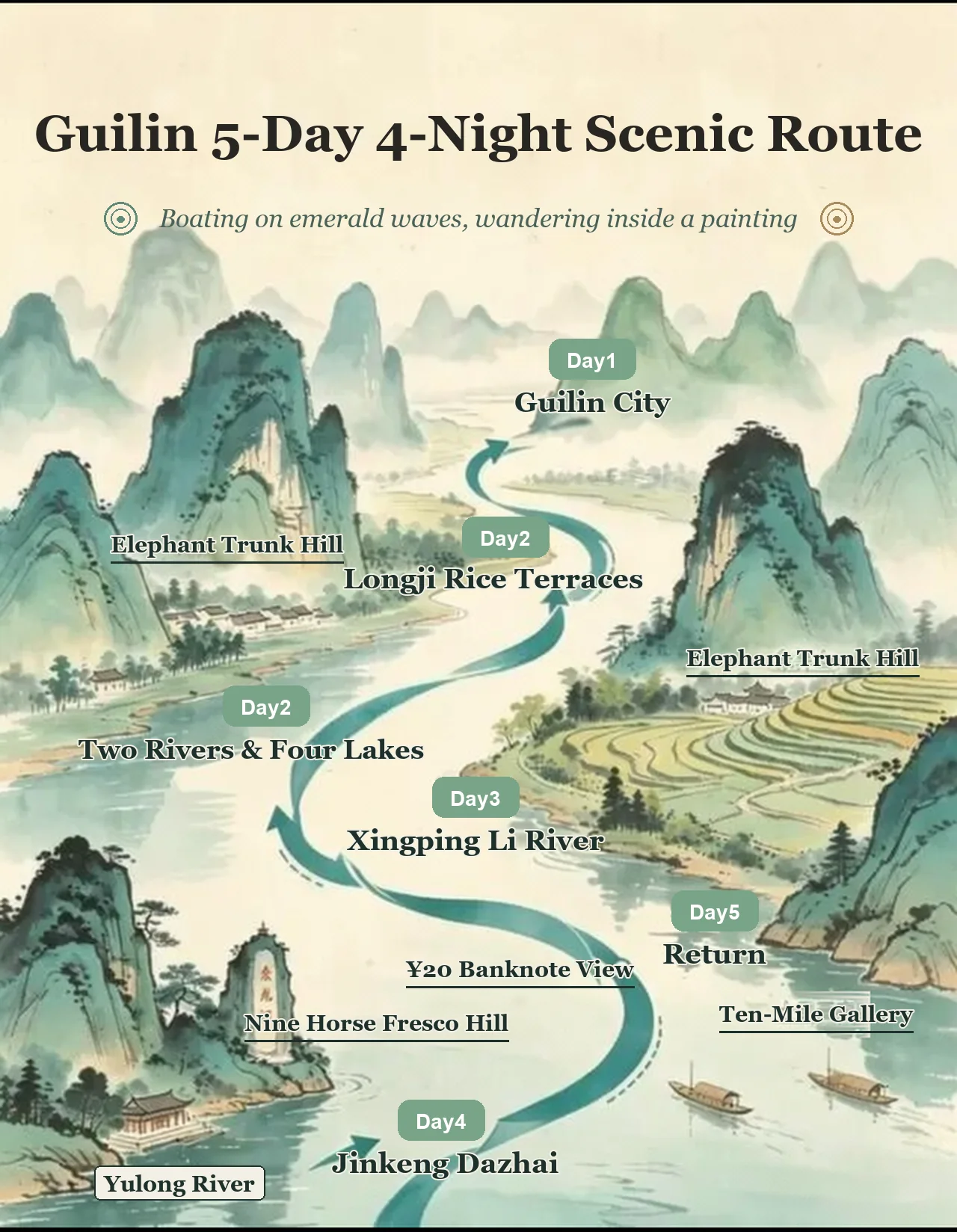
A: Five days splits Guangxi's karst country cleanly: Day 1 Guilin city (Elephant Trunk Hill, Jingjiang Princes' City, the Two Rivers Four Lakes night cruise), Day 2 the Yangdi–Xingping Li River raft — the ¥20-note backdrop — plus Xingping old town and Laozhai Hill sunset before moving to a Yulong River guesthouse, Day 3 the Yulong hand-poled raft in the morning and the Ten-Mile Gallery by e-bike in the afternoon, Day 4 up to the Jinkeng Dazhai terraces for sunset and a stilt-house night, Day 5 a slow morning and souvenirs back in Guilin. Book every raft and cruise through official channels ahead of time, carry a crisp ¥20 note, and budget about $240–330 (¥1,600–2,200) per person excluding long-distance transport.
What’s the short answer?
Guilin’s scenery is the real thing; most of its bad reviews come from bad logistics. This route never backtracks: Day 1 the city classics (Elephant Trunk Hill, the princes’ city, the lit pagodas of Two Rivers Four Lakes), Day 2 the Li River’s essential stretch — Yangdi to Xingping by 4-person raft, the exact view printed on the ¥20 note — before moving to a Yulong River guesthouse, Day 3 a hand-poled raft down the Yulong and an e-bike through the Ten-Mile Gallery, Day 4 a winding drive up to the Jinkeng terraces for sunset and a night in a stilt house, Day 5 a slow descent with souvenir shopping in Guilin. The two things that ruin trips here are unlicensed boats and same-day ticket scrambles; everything below is priced and timed to avoid both. Prices are USD at roughly ¥7 = US$1, CNY in brackets.
Day 1 — What does Guilin city hold? (the emblem, the old town, the lit lakes)
| Time | Stop | Cost | Notes |
|---|---|---|---|
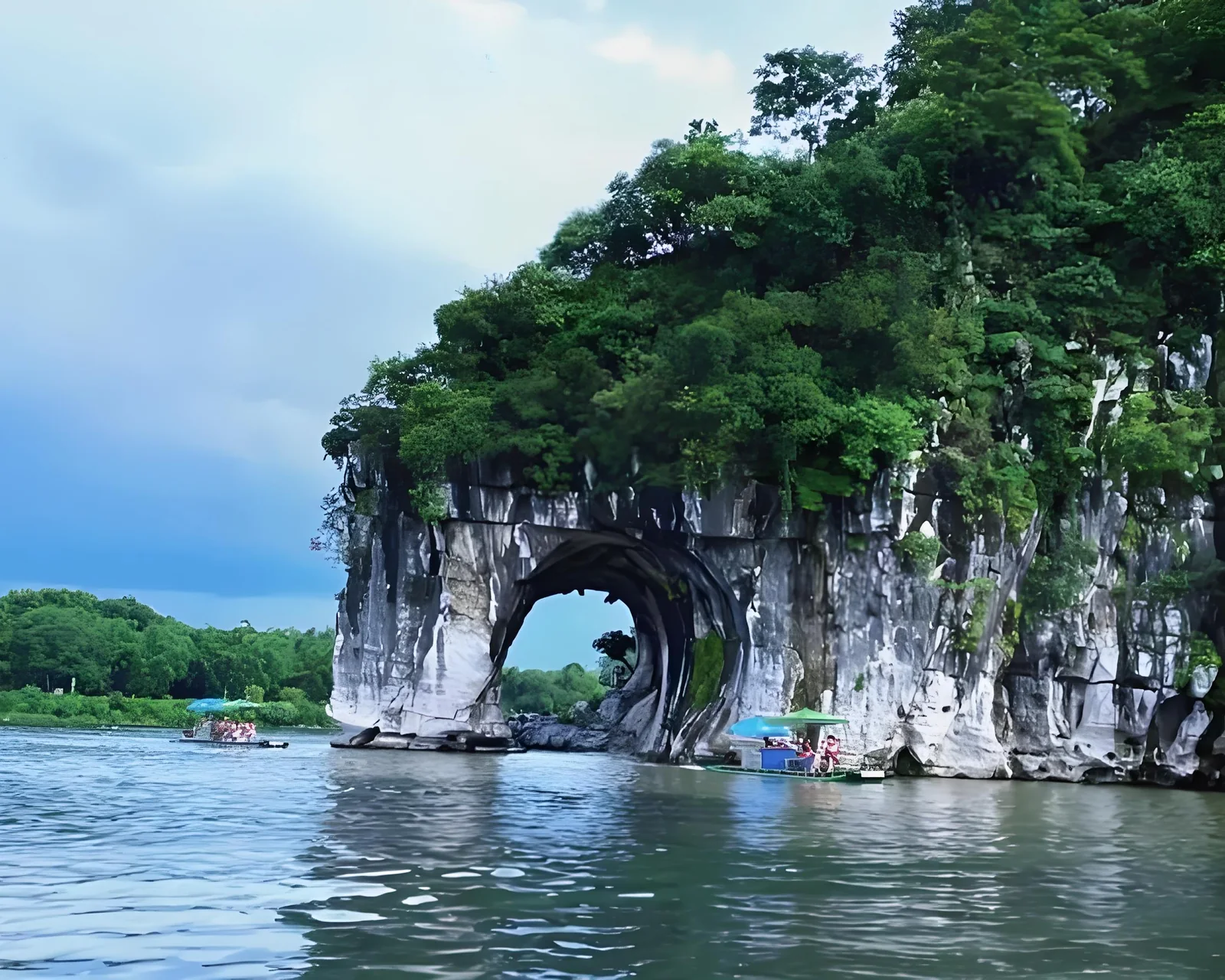
| Afternoon | Elephant Trunk Hill | Free, reservation ahead | Enter Gate 3 for the reflection shot; free full view from Xizhou Park across the river |
| Late afternoon | Jingjiang Princes’ City + Solitary Beauty Peak | $15 (¥100) | The Ming-era walled compound; the “Guilin’s scenery is the finest under heaven” inscription lives here |
| Evening | East–West Lane + Zhengyang Street | Free | Restored old-town lanes between the palace and the lakes — this is your dinner zone |
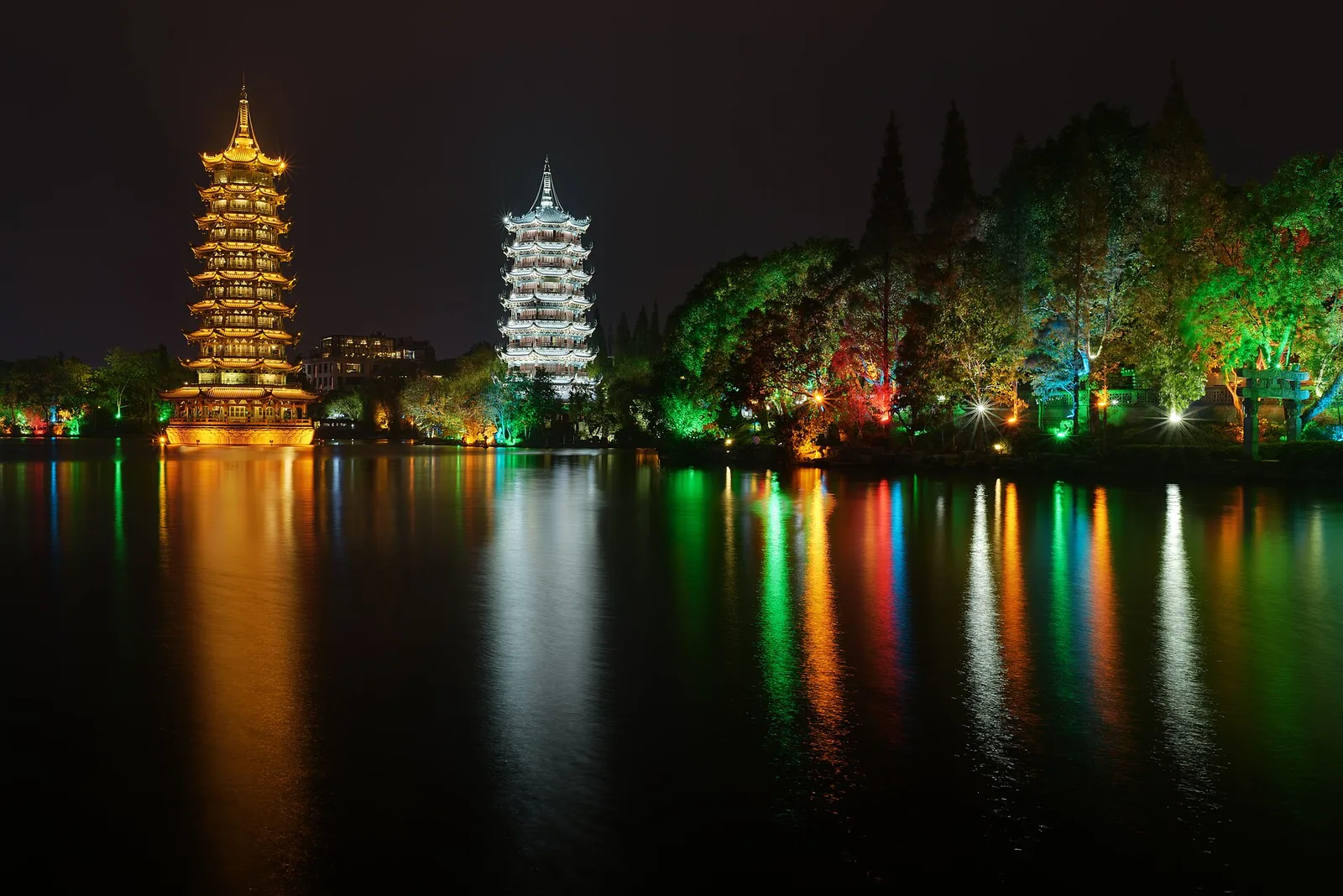
| Night | Two Rivers Four Lakes cruise | $28–30 (¥200) | The Sun and Moon Pagodas lit gold and silver over Shan Lake — Guilin after dark at its best |
How the day flows: make the free Elephant Trunk Hill reservation on the official account before you leave the hotel (it is the city emblem — an elephant drinking from the river — and Gate 3 gives the reflection angle; if slots are gone, the opposite bank at Xizhou Park photographs the whole thing for nothing). Walk north through the Jingjiang Princes’ City — the old walled administrative seat, with Solitary Beauty Peak inside for a skyline view — and come out directly into East–West Lane and Zhengyang Pedestrian Street for dinner. A bowl of Guilin rice noodles in a backstreet shop runs $0.75–1 (¥5–7); the same bowl inside a scenic area costs double and tastes worse. After dark, board a Two Rivers Four Lakes cruise: by day the twin pagodas are ordinary, but lit at night and doubled by the lake surface, they are the city’s best hour.
Sleep in the East–West Lane area for this one night: walking distance to everything above, quiet courtyards off the main lanes. One night in the city is enough — the scenery starts tomorrow.
See hotels in the Li River area, Guilin →
Day 2 — How do you run the Li River? (bring a crisp ¥20 note)
| Time | Stop | Cost | Notes |
|---|---|---|---|
| Morning | Guilin → Yangshuo by high-speed rail | ~$3.50 (¥25), 20 min | Or ride direct to Yangdi pier by taxi; from Yangshuo station take the bus or a metered ride — refuse unmetered touts |
| Core | Yangdi → Xingping, 4-person raft | $38 (¥255)/person, official channels only | Nine Horses Fresco Hill and Yellow Cloth Shoal — the ¥20-note backdrop |
| Afternoon | Xingping old town | Free | Quiet lanes behind the main street photograph better |
| Sunset | Laozhai Hill | Free, steep 30–40 min climb | The classic view over the Li River’s great horseshoe bend |
| Evening | Transfer to your Yulong River guesthouse | — | West Street is for the lights only — eat off the main strip |
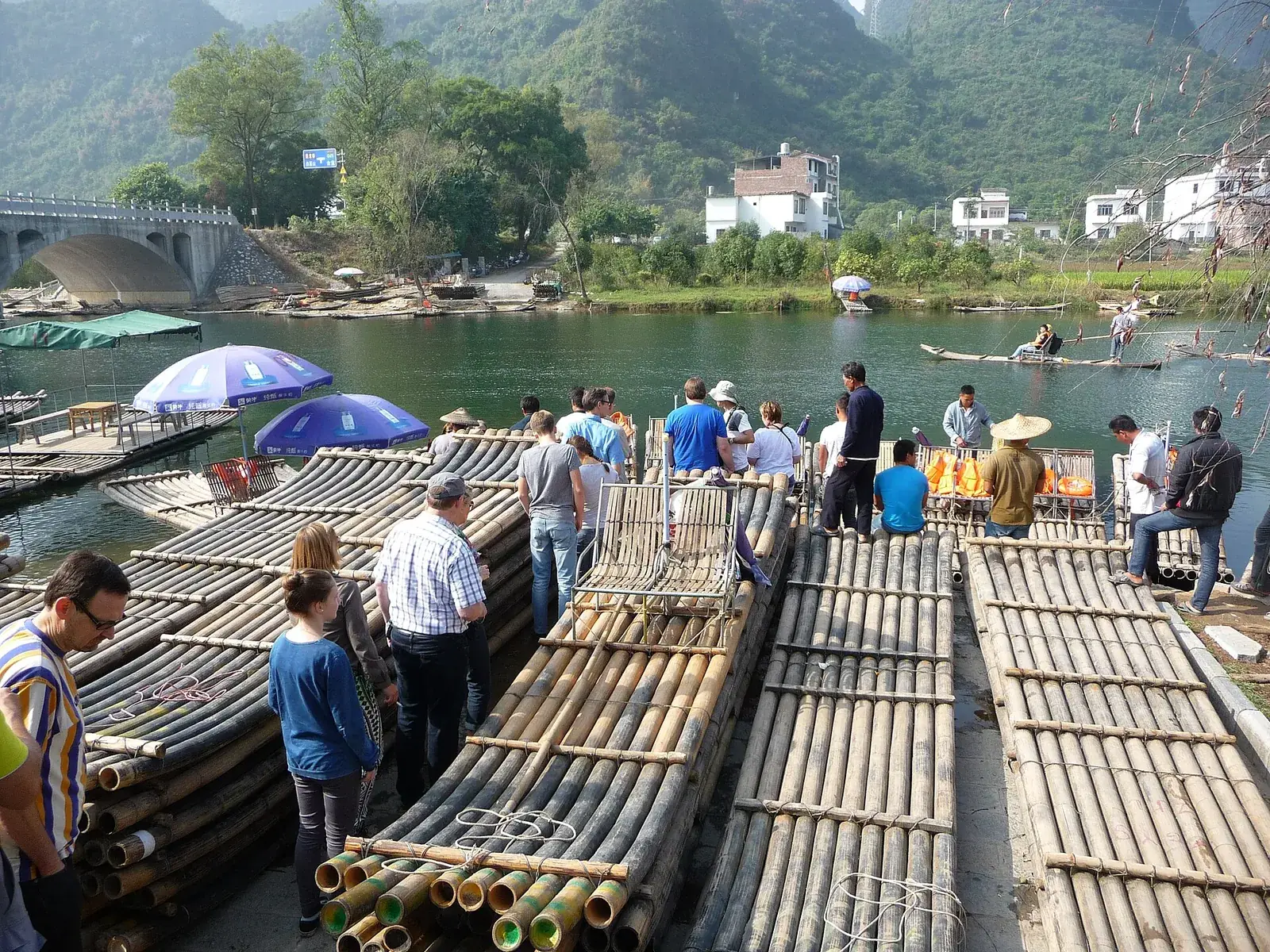
How the day flows: the Yangdi–Xingped stretch is the Li River’s highlight reel, and the motor-assisted 4-person bamboo rafts are the classic way to run it — low to the water, close enough to the cliffs to hear the current. Somewhere past Nine Horses Fresco Hill the river opens at Yellow Cloth Shoal, and the lineup of peaks is the one printed on the back of the ¥20 banknote. Bring a crisp note and hold it up against the real thing at the viewpoint — it is the most satisfying photograph in Guangxi. Two rules keep this day safe and cheap: buy only official tickets ( roadside “cheap private raft” offers carry no insurance and no rescue), and if you’re traveling with small children or older parents, take a cruise boat instead — rafts have height and age cutoffs.
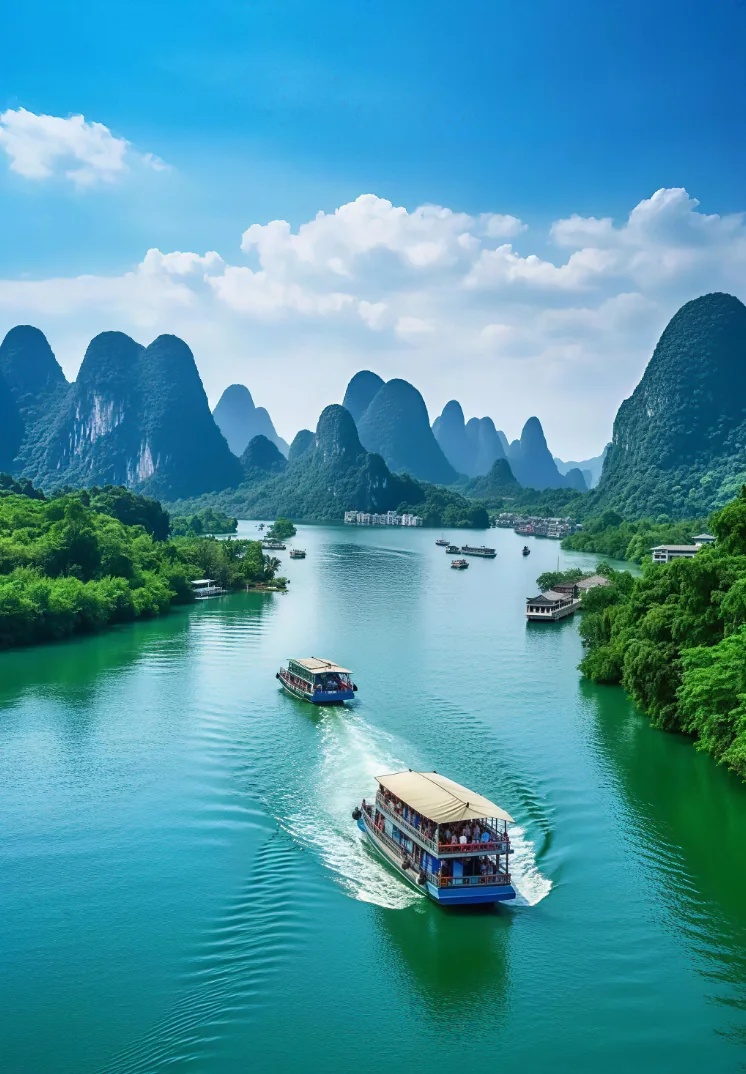
Land at Xingping, wander the old town’s side lanes (the quiet ones beat the rebuilt main street), and climb Laozhai Hill for sunset if your legs agree — the horseshoe bend below is the river’s most photographed curve. In the evening, move to your guesthouse in the villages along the Yulong River: Jiuxian or Jima, in the farmland, where the loudest sound at night is the river. West Street in Yangshuo town is worth one evening stroll for the neon and the crowds — eat before or after, off the main strip.
Check Guilin → Yangshuo fares & book →
Day 3 — What’s the Yulong River and Ten-Mile Gallery day like?
| Time | Stop | Cost | Notes |
|---|---|---|---|
| Morning | Yulong River hand-poled raft | $48 (¥320) per raft (2 pax) | The system: online release at 20:00 the night before, prime slots go in minutes in high season |
| — | Upper section: Jinlongqiao → Jiuxian | — | Four small weir drops — splash, screams, then quiet farmland; the best stretch |
| — | Easy section: Jima → Gongnong Bridge | — | Calm water; the right choice with seniors or kids |
| Afternoon | Ten-Mile Gallery by e-bike | ~$4.50 (¥30)/day | Cars are restricted; the e-bike is the native transport. Photograph the body for scratches before you ride off |
| Along the way | Big Banyan Tree, Moon Hill | View free | Photo from outside is enough — skip the entrance tickets |
| Optional | Silver Cave | $9 (¥65) | Big show cave, constant 20°C — take a layer |
How the day flows: the Yulong is the Li River’s gentler sibling, and the only authentic way down it is a hand-poled raft — skip the motorized ones, the engine deletes the entire point. Tickets are two to a raft, released online the previous evening at 20:00; solo travelers get paired, and in peak season latecomers queue at the dock hoping. The upper Jinlongqiao–Jiuxian run drops over four small weirs — each one a two-second thrill and a soaked laugh — between long silent stretches of rice fields, karst walls and old bridges. With seniors or small kids, take the lower Jima–Gongnong Bridge section: flat water, same scenery, no adrenaline.
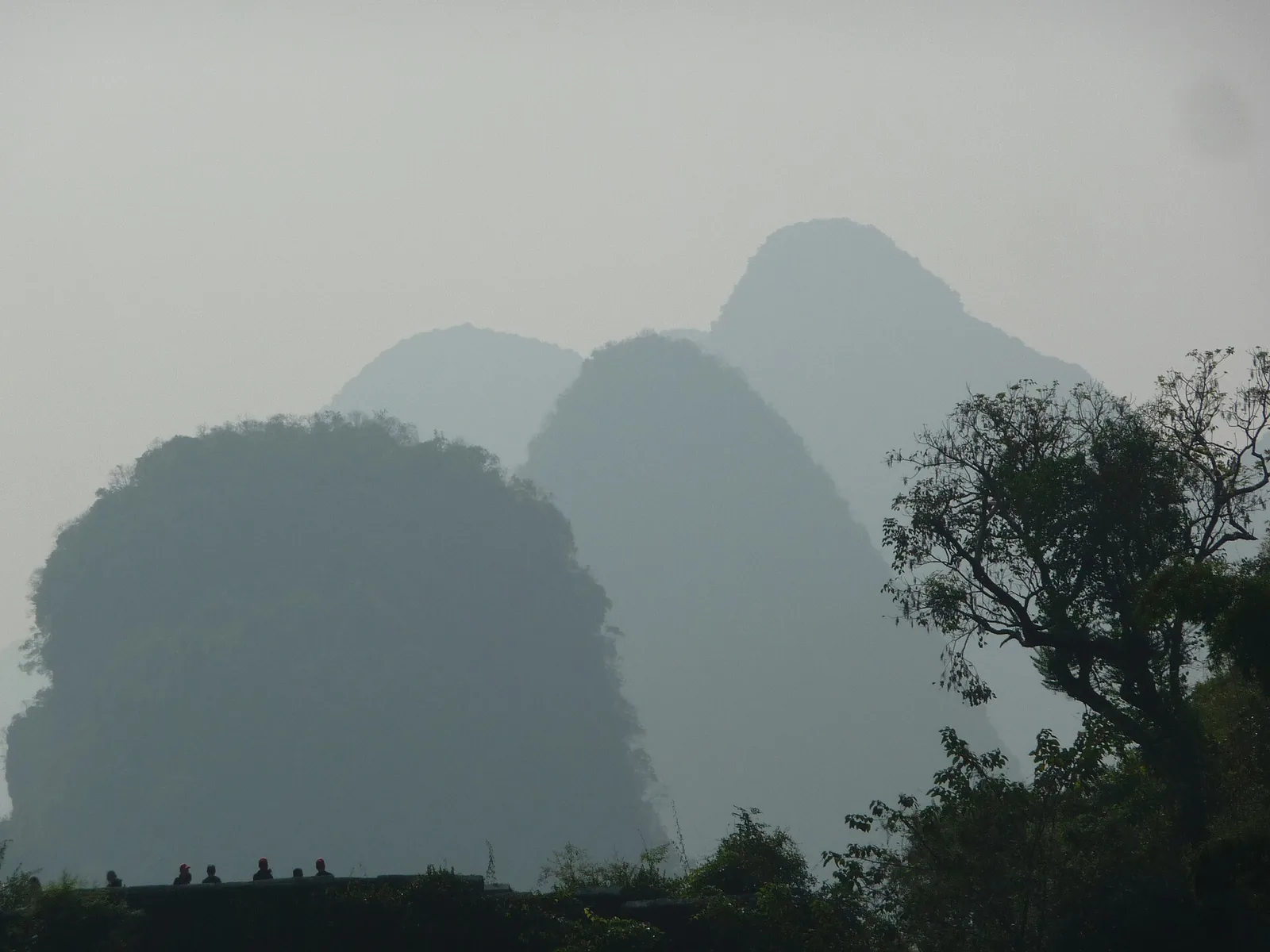
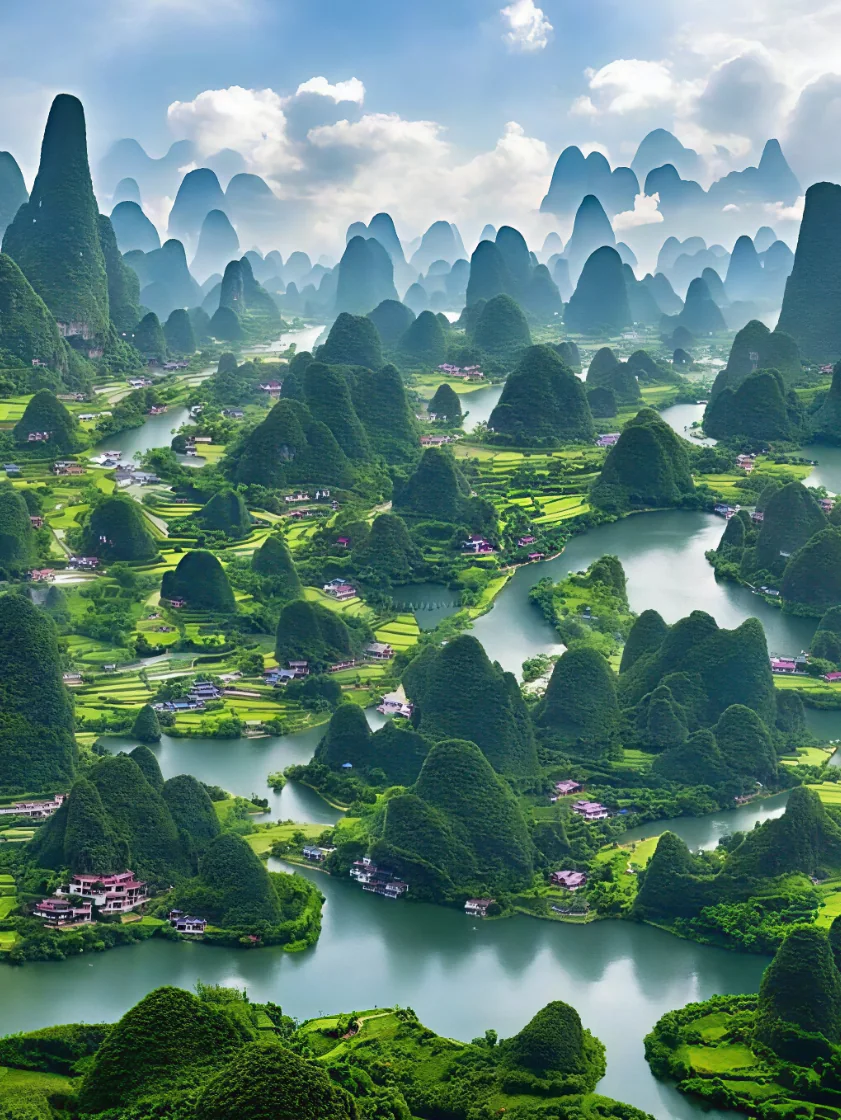
Afternoon is e-bike time. The Ten-Mile Gallery road threads between the peaks past the Big Banyan Tree and Moon Hill; motor vehicles are restricted along it, so a rented e-bike (~$4.50/¥30 a day) is both the fastest and the most scenic way through — stop wherever the light looks good. Film the bike’s body panels before leaving the rental shop; scratch disputes are the most common way tourists lose their deposits here. Dinner in Yangshuo town means beer fish: order at a restaurant with printed prices, confirm the fish’s weight and price per jin before it hits the wok, and prefer the boneless Mao Gu fish if you don’t want to pick bones. The tomato-and-beer broth over rice is the quiet highlight.
Day 4 — When do the Longji terraces hit their golden hour?
| Time | Stop | Cost | Notes |
|---|---|---|---|
| Morning | Guilin → Jinkeng Dazhai by shared car | ~1.5 h each way | Winding mountain road — motion-sickness pills if prone; self-driving novices shouldn’t |
| Midday | Jinkeng Dazhai terraces | ~$12 (¥80), valid 3 days | The most spectacular of the Longji sectors; viewpoints linked on foot |
| Midday | Cable car to Golden Buddha Peak (optional) | $15 round trip (¥100) / $8.20 one-way (¥55) | Official scenic-area price; skip it if you’d rather climb |
| Afternoon | West Hills Song + Thousand-Layer Ladders viewpoints | Included | The panorama shot and the close-up of the terraced ribs |
| Sunset–night | Stilt-house stay in Dazhai | Guesthouse | Bamboo-tube chicken, Yao cured pork, oil tea; temperatures drop — pack a layer |
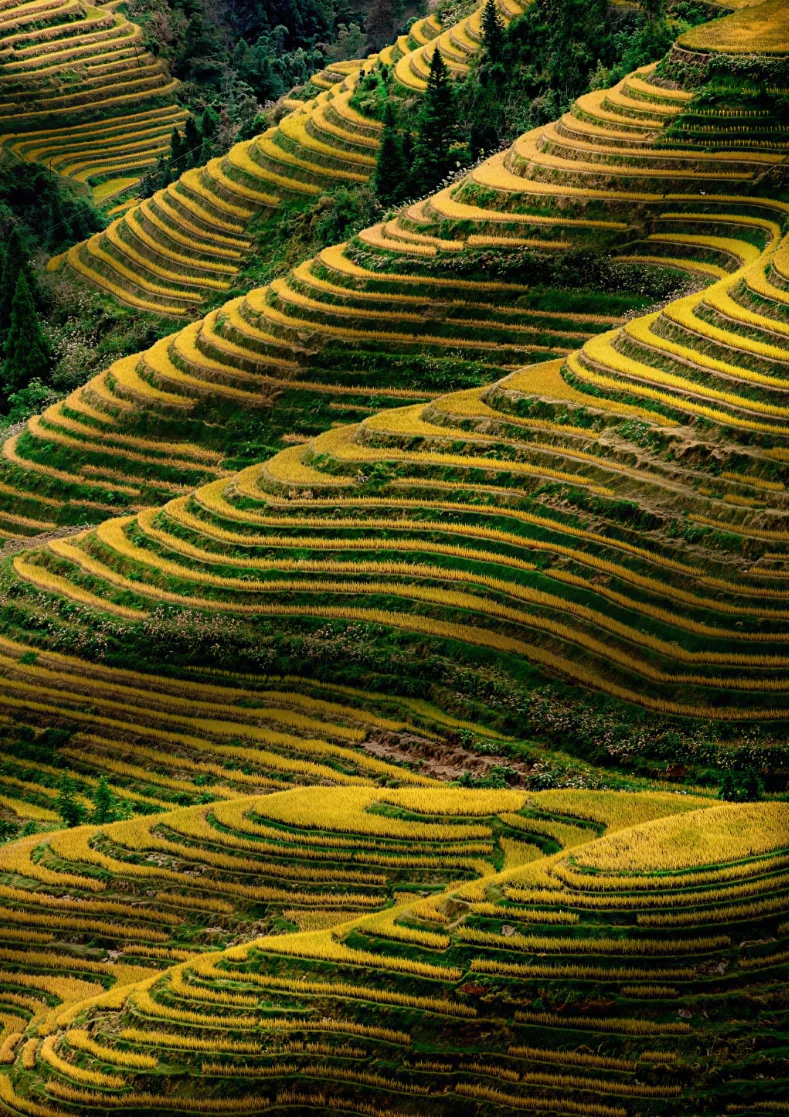
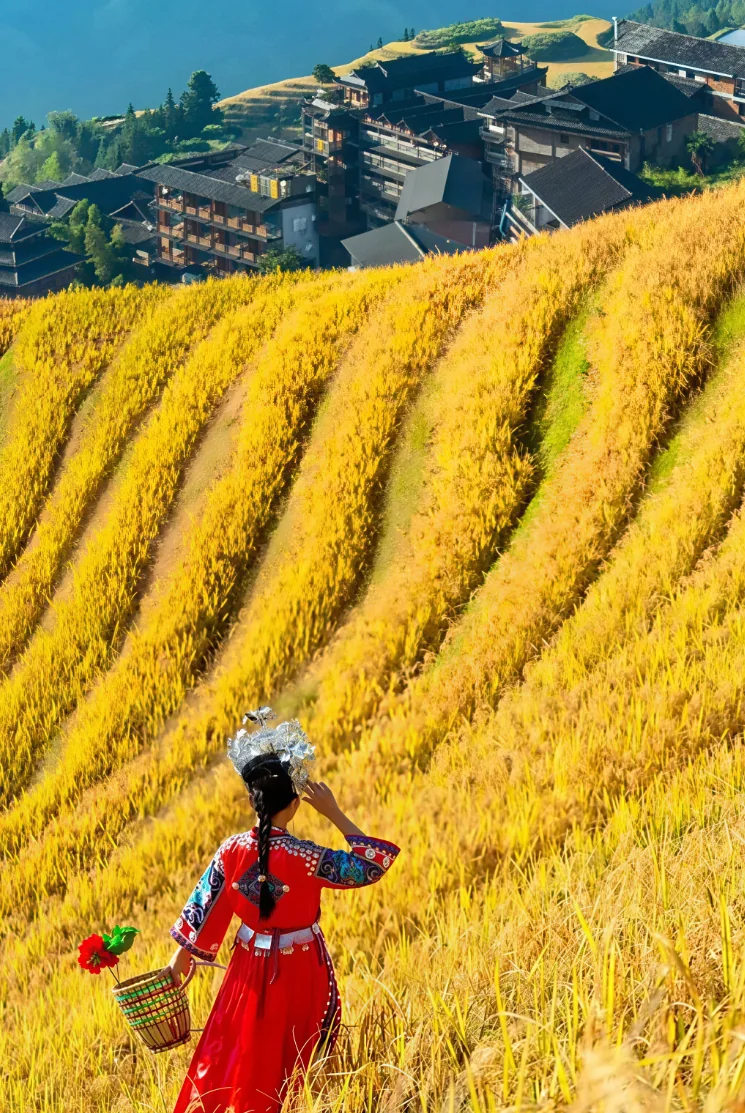
How the day flows: the Zhuang and Yao communities have terraced these mountains for centuries, and the Jinkeng Dazhai sector is where the sculpture is most dramatic — ridgeline after ridgeline stepped from valley floor to peak. September turns the whole thing gold; April–May fills the terraces like mirrors; by midsummer it’s a single deep green. Work the viewpoints on foot or take the cable car up to Golden Buddha Peak, then be somewhere with a clear west aspect when the sun drops — the terraces change color in minutes. Stay the night in a stilt-house guesthouse: dinner is bamboo-tube chicken and Yao cured pork, and oil tea (bitter first, sweet after — sugar available) around the fire. After dark the village lights come on below the black ridgelines, and in the morning the clouds sometimes pour through the terraces before burning off. That — not the drive up — is why you stayed.
Day 5 — What’s the plan down the mountain and home?
No alarm. Wander the terraces while the tour groups are still on their buses up, have a long guesthouse breakfast, and descend around midday. Back in Guilin, buy souvenirs in a city supermarket, not at any scenic area — rice-noodle gift packs and luohanguo (monk fruit) run about half the price. Afternoon trains and flights out.
What do five days in Guilin actually cost?
About $240–330 (¥1,600–2,200) per person excluding long-distance transport. The breakdown:
| Item | USD (CNY) |
|---|---|
| 4 nights lodging (city hotel + Yulong guesthouse + stilt house) | ~$135–185 (¥900–1,250) |
| Li River raft, Yulong raft (per person, 2 sharing), Two Rivers cruise, princes’ city, Longji ticket + cable car | ~$130–150 (¥900–1,050) |
| Food (noodle shops, one beer-fish dinner, stilt-house meals) | ~$50–70 (¥350–480) |
| Local transport (rail to Yangshuo, shared cars, e-bike) | ~$25–35 (¥170–240) |
| Total per person, excluding long-distance transport | ~$240–330 (¥1,600–2,200) |
A 3-day short version (Guilin + Yangshuo only, no Longji) lands at $150–225 (¥1,000–1,500).
Which traps actually cost people money?
Unlicensed rafts and same-day ticket scrambles — everything else on this list is smaller. The full list:
- Unlicensed rafts — official tickets only, on the Li River especially. No insurance, no rescue, no recourse.
- Ticket-release timings — Yulong rafts go on sale at 20:00 the night before; prime Li River slots sell out ahead in season. Book through official or reputable channels the moment you know your date.
- “Free photo” stands in scenic areas — the small print is free, the large print is expensive.
- Street touts — cheap one-day tours with “free transport”, aunties dragging you into restaurants, tricycle drivers quoting fantasy fares. Smile, keep walking.
- West Street markups — main-strip food and silver souvenir shops carry tourist pricing; the established beer-fish names print their prices.
- Scenic-area rice noodles — double the city price for a worse bowl. Eat in the backstreets, always $0.75–1 (¥5–7).
- Scratch disputes on e-bike rentals — photograph all four sides before riding off.
What should you know before you go?
Seasons decide the scenery: April–May mist, September–October gold. The rest:
- Seasons: April–May misty river at its most ink-painting; June–August green and warm with frequent showers; September–October golden terraces and the steadiest weather. Winter is quiet, cheap, damp, and occasionally too low-water for rafting.
- Getting in: Guilin Liangjiang airport (KWL) is the entry; by rail, prefer Guilin station (city center) over Guilin North, and skip Guilin West — it’s far out. The Guilin–Yangshuo high-speed hop is 20 minutes, about $3.50 (¥25).
- Packing: sunscreen, hat, waterproof phone pouch, rain layer (mountain showers arrive fast), grippy shoes (cave floors and terrace paths are slick), stomach remedies for the chili-heavy food, and a light jacket for the 20°C caves and the mountain evenings.
- With kids or seniors: cruise boat over raft on the Li River, the lower Yulong section over the upper, cable car up the terraces — and see our payments guide and hotels guide before booking anything.
Prices converted at roughly ¥7 = US$1 (rate on publication date: ¥6.7 = US$1, rounded for clarity).
Background reading: Li River, Yulong River, Longsheng Rice Terraces, South China Karst — Wikipedia (accessed Sept 2026).
Practical facts checked against official sources
- Guilin tourism authority — Li River cruise licensing and ticket notices: guilin.gov.cn
- Guilin Lizhou sightseeing area announcements: guilin.gov.cn
Common questions
Is 5 days enough for Guilin, Yangshuo and the Longji terraces?
Yes — 5 days is the comfortable full route: one night in Guilin city, two nights by the Yulong River in Yangshuo and one night up in a Longji stilt-house village, ending back in Guilin. Travelers with only 3 days should drop Longji entirely (the round trip eats 5+ hours) and split the time between Guilin city and Yangshuo.
Li River bamboo raft or cruise ship — which should I take?
The Yangdi–Xingping stretch is what you're here for, and both craft cover the highlights (Nine Horses Fresco Hill, the ¥20-note backdrop at Yellow Cloth Shoal). The 4-person motor rafts are the classic choice (about $18/¥120 per person on the Yangdi stretch) — nimbler, closer to the water, and you board at Yangdi. Families with small children or older travelers should take a cruise boat instead: rafts have height and age limits, and boats aren't weather-cancelled as often. Either way, book the official operator through a legitimate channel — unlicensed private rafts carry no insurance.
Where should I stay in Yangshuo — West Street or the Yulong River?
Skip West Street unless you want bar noise until 2 am. Base yourself in the villages along the Yulong River — Jiuxian or Jima — where guesthouses sit in the farmland with raft views, and owners will book raft tickets and routes for you. West Street is still worth an evening stroll for the lights; it's 15–20 minutes from the river villages by taxi or scooter.
Should I visit the Longji rice terraces as a day trip or stay overnight?
Stay overnight if you can. The drive from Guilin is about 1.5 hours each way on winding mountain roads, and the payoff — sunset and morning mist rolling over the terraced ridges, with the stilt-house villages lighting up — happens at the ends of the day. A rushed day trip arrives with the tour buses and leaves before the light gets good. The Jinkeng Dazhai area has the most dramatic views (ticket $12/¥80, valid 3 days; cable car to Golden Buddha Peak $8/¥100 round trip).
Yangshuo beer fish — how do I avoid getting overcharged?
Order in a proper restaurant that prints prices — the established names around West Street have decades of reputation to protect — and confirm the fish's weight and per-jin price before it goes to the kitchen; the bill is by weight. Avoid anywhere with someone actively dragging you in from the street. The boneless Mao Gu fish is the safe order if you hate picking bones, and the tomato-and-beer broth is worth pouring over rice.
When is the best time to visit Guilin?
April–May brings mist and spring rain — the Li River at its most ink-painting. June–August is lush and warm, best for swimming and the terraces at their greenest, but showers are frequent. September–October is peak: golden rice on the Longji terraces, stable weather, clear river views. Winter (November–March) is quiet and cheap but damp, and low water can suspend rafting on some stretches.