What Can You Do in Guiyang in 3 Days?
Published 2026-09-24 · Updated 2026-10-26 · Itineraries
TL;DR
A: Guiyang is best used as your Guizhou gateway, not a one-stop city. Day 1 walks the city core (Qianling Mountain, the provincial museum, Jiaxiu Pavilion at night); Day 2 is a single day trip to Huangguoshu Waterfall in Anshun, about 1.5 hours away by high-speed rail; Day 3 slows down at Qingyan Ancient Town and Tianhetan. The metro reaches most sights, the city is a cool-summer escape, and sour-fish hotpot is the dish to beat.
What’s the short answer?
Guiyang is the airport and rail gateway for all of Guizhou — Huangguoshu, the Miao villages, the karst caves — so the smart move is to treat it as your landing base, not a city you rush through. Most visitors either skip it entirely or overload it; this route does neither. It keeps Day 1 in the city, sends Day 2 on one clean round trip to Huangguoshu (which is in Anshun, not Guiyang), and uses Day 3 for two nearby old-town and cave sights. Guiyang also sits at about 1,100 m, so summer days stay around 22–23°C — a genuine cool-season escape.
Why does this Guiyang route work?
Guizhou’s headline sights scatter across the province, and naive plans burn hours backtracking. This one respects that geography:
- Day 1 stays inside the city, using the metro (Lines 1, 2, 3 and the S1 line) so you never need a car for the core loop.
- Day 2 makes Huangguoshu a single out-and-back: Guiyang North to Anshun West by rail (~30 min), then a shuttle to the falls. One big sight, no overnight move.
- Day 3 pairs Qingyan Ancient Town with Tianhetan, both reachable without leaving the metro network (Tianhetan is on the S1 line; Qingyan by a short taxi from Line 3).
Day 1 — What is the city core — Qianling’s monkeys, the museum and Jiaxiu at night?
| # | Stop | Cost | Getting there |
|---|---|---|---|
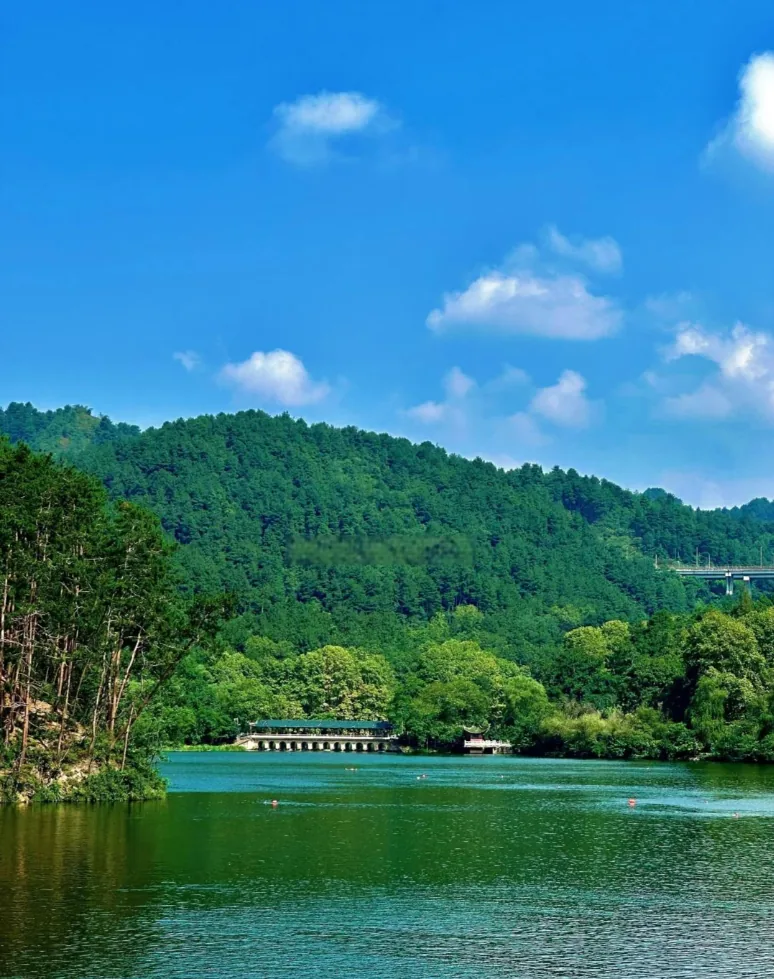
| 1 | Qianling Mountain Park (wild macaques, Hongfu Temple) | ¥5 (about $0.70); timed real-name booking required | Line 3 Qianlingshan Park Station (Exits A/C) |
| 2 | Guizhou Provincial Museum (minority costumes, fossils) | Free; book ahead; closed Mondays | Line 1 Lincheng Xilu Station |
| 3 | Lunch — Laokaili sour-fish hotpot (Shengfu Road) | ~¥60 (about $8.50) per person | Near Line 1/2 Penshuichi Station |
| 4 | Jiaxiu Pavilion (Ming-dynasty pavilion on the Nanming River) | Free | Taxi or walk from Line 1 Hebin Gongyuan / Line 2 Zilin’an |
| 5 | Qingyun Road / Minsheng Road night market | Free to stroll | Central; short taxi |
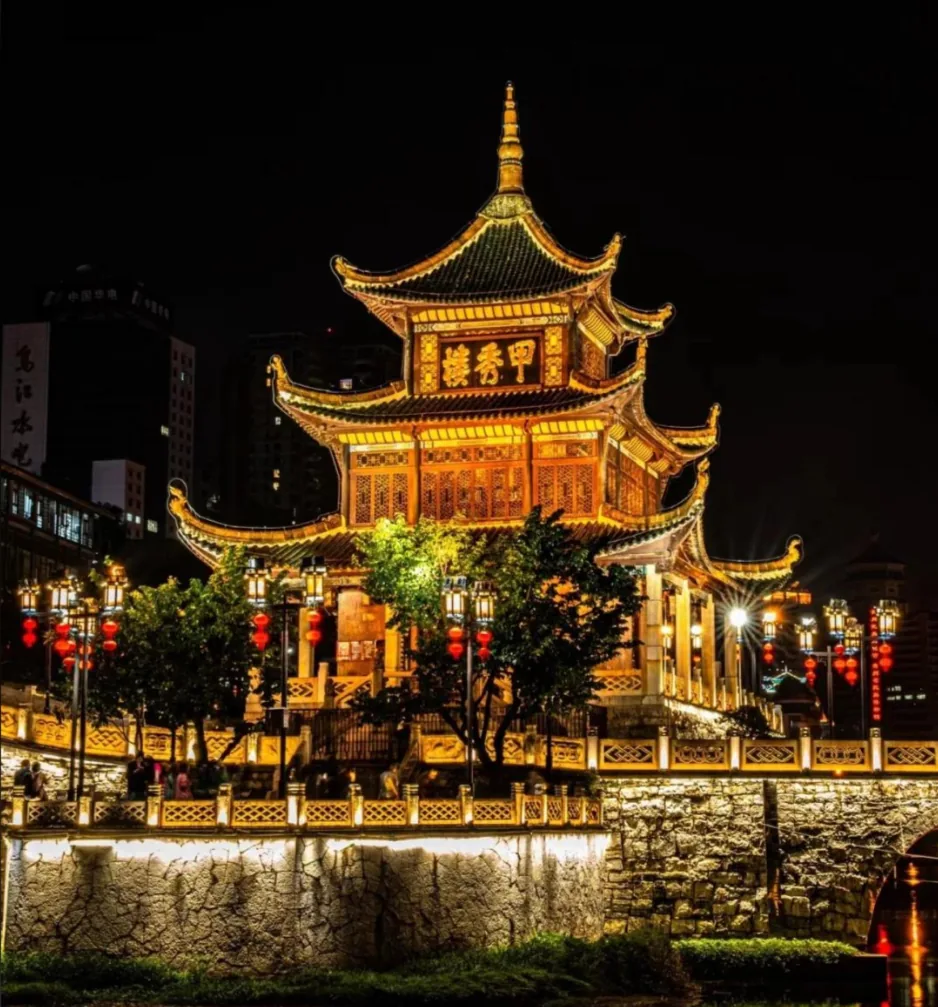
How the day flows: Start at Qianling Mountain in the morning — the macaques are the draw, but keep food hidden and never make eye contact with them. Drop into the museum after lunch (it is air-conditioned and books out on Mondays), then head to Jiaxiu Pavilion in the late afternoon so you catch the pavilion’s lit reflection after dark. Finish at a night market for duck, tofu and iced drinks. Keep the day light; Day 2 starts early.
Three local shortcuts most visitors miss:
- There is no “Dazhonglu” metro station in Guiyang — older blogs invent it. The old-town core is served by Line 1 Zhongshan Xilu or the Line 1/2 Penshuichi interchange. Trust the official metro map, not the travel forums.
- Qianling Mountain has required real-name booking since May 2026 via the “Guiker Hui” platform. You can no longer just buy a ticket at the gate, so book before you fly.
- Fly or rail into Guiyang and stay two nights rather than day-tripping from Kunming or Chongqing. The city is the hub every Guizhou route radiates from, so using it as a base saves a transfer every time.
Day 2 — How do you do Huangguoshu Waterfall as a day trip from Guiyang (it’s in Anshun)?
| # | Stop | Cost | Getting there |
|---|---|---|---|
| 1 | Guiyang North → Anshun West high-speed rail | ¥46 (about $6.50) | Line 1 Guiyang North Station |
| 2 | Anshun West → Huangguoshu shuttle bus | About 40 min (book on the official platform) | Shuttle from Anshun West |
| 3 | Huangguoshu Waterfall (Great Falls, Doupotang, Tianxingqiao) | ~¥210 (about $29) entry ¥160 + ¥50 shuttle; foreign/non-mainland visitors buy the platform foreign-national ticket | Open 07:00–18:30 |
| 4 | Return to Guiyang North | Same rail | Shuttle back to Anshun West, then Line 1 |
How the day flows: Take a morning train to Anshun West, connect to the shuttle, and arrive at the falls before the midday coach crowds. The Great Falls (with the Water Curtain Cave behind it) are the headline; Doupotang and the Tianxingqiao stone forest fill the rest. The shuttle bus threads all three, so buy it. Be back at Anshun West by early evening for the return rail — this is a day trip, not an overnighter.
Three local shortcuts most visitors miss:
- Huangguoshu is in Anshun, not Guiyang — about 1.5 hours by rail plus shuttle. Budget the transfer time or you will miss the last entry.
- Booking opens 7–15 days ahead with timed slots, and there is no same-day ticket. The falls sell out in peak summer, so reserve before you leave home.
- Go in the wet season (May–October) for the fullest flow; the falls are thin and underwhelming in the winter dry months.
Day 3 — Where do you slow down — Qingyan Ancient Town and Tianhetan?
| # | Stop | Cost | Getting there |
|---|---|---|---|
| 1 | Qingyan Ancient Town (600-year Ming military town) | Gate ¥10 (about $1.40), combo ¥60 (about $8.50) | No metro; Line 3 Tongmuling then taxi/bus ~20 min |
| 2 | Lunch — Qingyan braised pig’s trotters (Jinbixuan) | ~¥25 (about $3.50) | Inside the town |
| 3 | Tianhetan (karst caves, boat ride, waterfall) | ¥75 (about $10.50) combo | Line S1 Tianhetan Station |
| 4 | Back to city / night market | Free | Line 1/2 to central Guiyang |
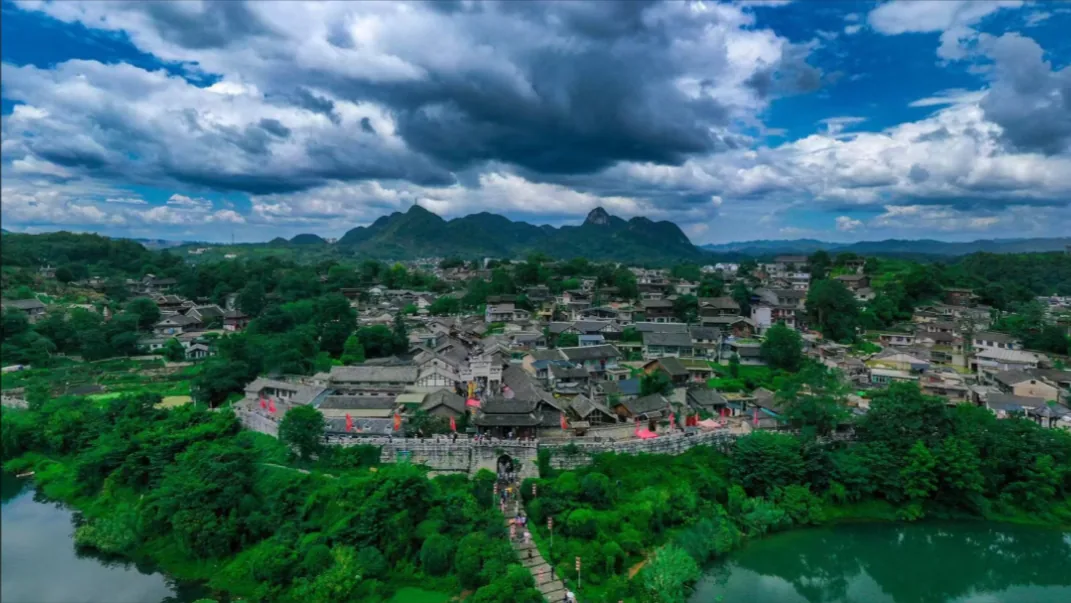
How the day flows: Spend the morning in Qingyan’s stone lanes and city wall, eat the trotters the town is famous for, then return toward the city and drop into Tianhetan — a compact “greatest hits” of Guizhou karst with a cave boat ride. Both are low-stress, so this is the recovery day after Huangguoshu. Keep the evening free for one last hotpot.
Three local shortcuts most visitors miss:
- Qingyan has no metro station; Line 3 Tongmuling is the closest, then a short taxi. A direct city shuttle also runs, which is simpler than figuring out the bus.
- Tianhetan is on the S1 line — a straight metro ride, and far easier than the old “take a bus” advice you will still find online.
- Carry cash for small stalls and the older shops; Alipay and WeChat cover most places, but some night-market vendors are cash-only.
What to eat in Guiyang (and where)
Guiyang’s flavour is sour, spicy and aromatic — and “mild” here can still bite. Five solid stops:
- Laokaili Sour-Fish Hotpot (Shengfu Road) — the signature sour-fish hotpot (suantangyu), about ¥60 (about $8.50) per person; near Line 1/2 Penshuichi.
- Jinpai Luoji Changwang Noodles (Caijia Street) — the breakfast king: alkali noodles with intestine, blood and crispy pork, ~¥15 (about $2). Arrive before 8:00; the queue builds fast.
- Siliang Silk Dolls (Huaguoyuan / Penshuichi) — thin rice wrappers you stuff with shredded vegetables and douse in sour dip, ~¥45 (about $6.50) per person; Line 3 Huaguoyuan.
- Dangjia Crispy Duck (main store) — fried until the bones are crisp, dusted with numbing pepper, ~¥25 (about $3.50); a heritage shop, open 09:00–22:00.
- Qingyan braised pig’s trotters (Jinbixuan) — soft, bony and rich, ~¥25 (about $3.50); eat it inside Qingyan Ancient Town.
If spice is a problem, say “wei la / mian la” (mild / no spice) when you order — Guizhou “mild” is often hotter than “medium” elsewhere. See our payments guide for paying with a foreign card.
Practical notes
The one rule that breaks most Guiyang plans: every core Guizhou sight uses timed real-name booking, and there is no same-day ticket at Huangguoshu. Book ahead, then build the rest around it.
- Getting in: KWE Longdongbao Airport connects to the city by Line 2 Longdongbao Airport Station (or Line 1); a taxi to the center is about 30 minutes. Most high-speed trains use Guiyang North (Line 1). Avoid Guiyang East — it has no metro.
- Metro: Lines 1, 2, 3 and the S1 line. Use the Alipay transit code with the city set to “Guiyang.” Old-town stops are Zhongshan Xilu or Penshuichi; the airport is on Line 2; Tianhetan is on the S1 line.
- Booking: Huangguoshu 7–15 days ahead; Qianling Mountain via “Guiker Hui”; the provincial museum ahead, closed Mondays. Foreign passports often have a dedicated ticket tier on Trip.com.
- Season: Best from April to October; June–August is the cool-summer peak (around 22–23°C) but also the busiest. See the 12306 train guide for rail booking.
- Pair it: Guiyang is the natural Guizhou hub, and if you want a second landscape-heavy stop, our Zhangjiajie 3-day itinerary pairs the sandstone peaks with this route well. For a hotel that takes foreign passports, see hotels that accept foreign passports, and land with data via the eSIM guide.
More on the city: the Guiyang destination page.
Common questions
Is 3 days enough for Guiyang?
Yes — three days covers the city core plus Guizhou's two easiest side trips. Day 1 stays in Guiyang (Qianling Mountain, the provincial museum, Jiaxiu Pavilion at night), Day 2 is a single day trip to Huangguoshu Waterfall, and Day 3 slows down at Qingyan Ancient Town and Tianhetan. Add a fourth day only if you want the Xijiang Miao villages.
Is Huangguoshu Waterfall in Guiyang?
No — it is in Anshun, about 1.5 hours from Guiyang. Take the high-speed rail from Guiyang North to Anshun West (about 30 minutes, ¥46, about $6.50), then a shuttle of about 40 minutes to the falls. Timed real-name booking opens 7–15 days ahead and there is no same-day ticket.
Are the monkeys at Qianling Mountain safe to be around?
They are wild macaques and they snatch food and bags. Keep food hidden, don't carry plastic bags, never make eye contact and don't touch the babies. The park costs ¥5 (about $0.70) and has required real-name booking via the official platform since May 2026.
How do I get from Guiyang airport to the city?
Guiyang has a metro: Line 2 serves Longdongbao Airport Station directly into town (transfer to Line 1 available), and a taxi takes about 30 minutes. For trains, most high-speed services use Guiyang North on Line 1 — avoid Guiyang East, which has no metro.
When is the best time to visit Guiyang?
April to October. June–August is the cool-summer peak — the city sits at about 1,100 m and July averages 22–23°C, making it China's famous summer escape — but it is also the busiest. September–October is calmer with similar weather.
Should I use Guiyang as a base for Guizhou?
Yes — that is what it is for. Huangguoshu, the Xijiang Miao villages and the Libo karst all radiate from Guiyang by high-speed rail (Anshun ~30 min, Kaili ~40 min, Libo ~1.5h), so staying 1–2 nights and branching out beats treating Guiyang as a one-stop city.
Sources
- 12306 — official China Railway ticketing platform — operator · accessed 2026-10-26
- 12306 — official English FAQ (endorsement and refund rules) — operator · accessed 2026-10-26