What Can You Do in Suzhou in 3 Days?
Published 2026-09-24 · Updated 2026-10-26 · Itineraries
TL;DR
A: Suzhou is the easiest day trip from Shanghai (25 min by high-speed rail), and a calm 2-3 day base if you stay. Day 1 hits the garden core — Humble Administrator's Garden, Suzhou Museum, Lion Grove — all on Line 6 Zhuozhengyuan Subo Station; Day 2 adds Tiger Hill and the Lingering Garden or a Tongli water town run; Day 3 does the Jinji Lake modern side. Book every garden online in advance; there are no on-site tickets.
What’s the short answer?
Suzhou is China’s garden-and-canal city, and it is the single easiest side trip from Shanghai — 25 minutes by high-speed train, no airport needed. Most first-timers treat it as a one-day escape from Shanghai; stay two or three days and you can add a water town and the modern Jinji Lake shore without rushing. The catch is that Suzhou rewards slow walking and small rooms, not checklist sprinting — so this route clusters each day on one metro line and ends every afternoon on a canal street.
Why does this route work?
Suzhou’s headline sights are deceptively close. The three biggest — the Humble Administrator’s Garden, the Suzhou Museum and the Lion Grove Garden — all sit on one metro station, Line 6 Zhuozhengyuan Subo (Exit 1), so Day 1 never backtracks. The canal streets (Pingjiang Road, Shantang Street) are short rides away, and the evening cruise replaces a taxi. Day 2 pushes west to Tiger Hill and the Lingering Garden (a different line, so we group them), or north to the Tongli water town on Line 4. Day 3 flips to the Jinji Lake side for a modern counterpoint. Each day = one direction = forward motion.
Day 1 — What is the garden core, and how do you do it from Shanghai? (one metro station, zero backtracking)
| # | Stop | Cost | Getting there |
|---|---|---|---|
| 1 | Humble Administrator’s Garden (first entry, before 09:30 tour groups) | ¥70-80 (about $10-11) | Line 6 Zhuozhengyuan Subo Stn, Exit 1 |
| 2 | Suzhou Museum (free, I.M. Pei building beside the garden) | Free (reserve 7 days ahead) | Same station, Exit 1 |
| 3 | Lion Grove Garden (famous maze of rockery) | ¥40 (about $6) | Same cluster, walk 5 min |
| 4 | Pingjiang Road (canal lane, Kunqu and pingtan museums) | Free | Line 6 Xuanqiao Lane / Line 1 Xiangmen |
| 5 | Shantang Street & night canal cruise | ¥46+ (about $7+) | Line 2 Shantang Stn, Exit 1 |
How the day flows: Land at Suzhou Station, ride Line 4 to Lexiangqiao then Line 1 to Xiangmen (or a ~¥15 DiDi), and reach the Humble Administrator’s Garden at first opening — tour groups flood in after 09:30. Do the garden, cross to the Suzhou Museum (book the 09:00 slot 7 days out), then the Lion Grove next door. Walk south to Pingjiang Road for lunch and a slow browse, and finish at Shantang Street for the lit-up canal cruise. Last train back to Shanghai runs late, so a same-day return is easy.
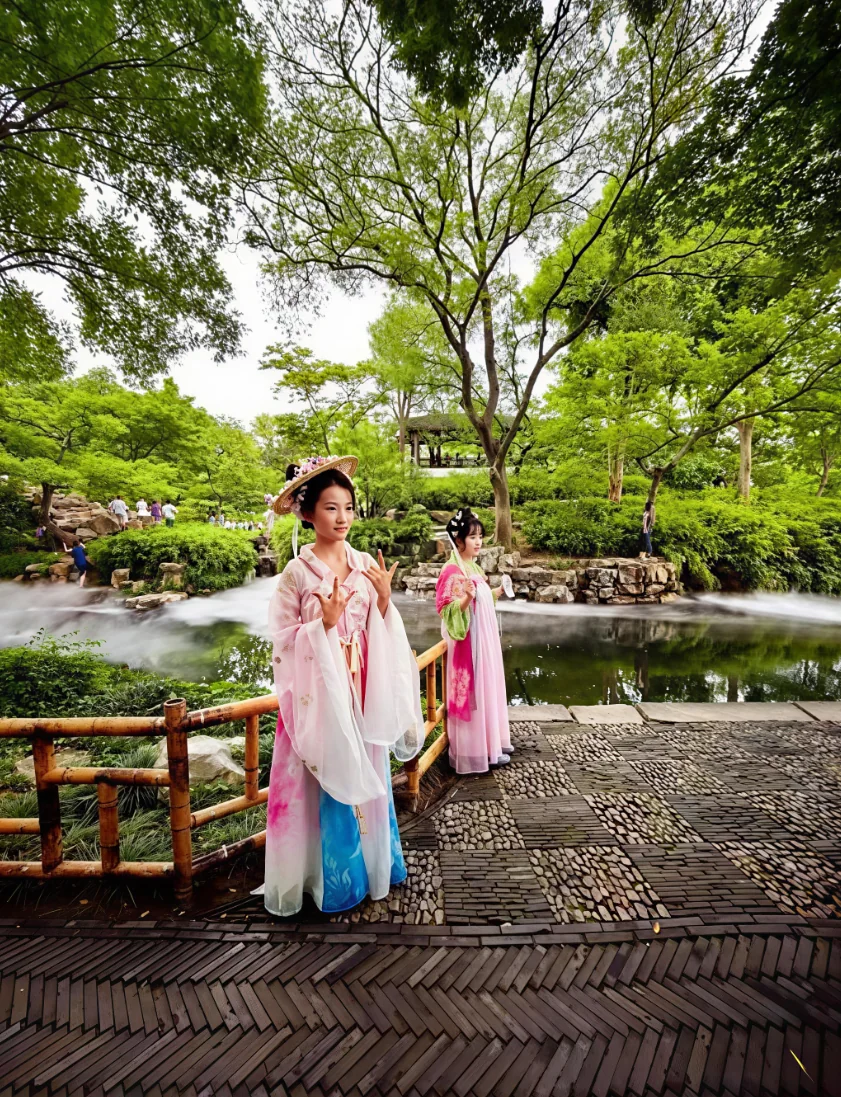
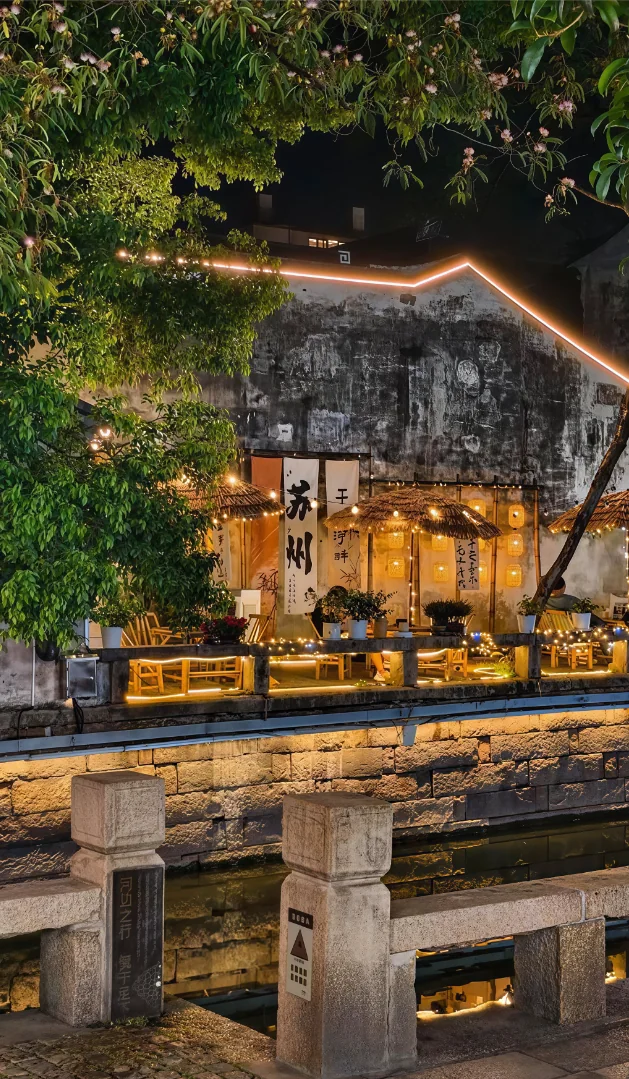
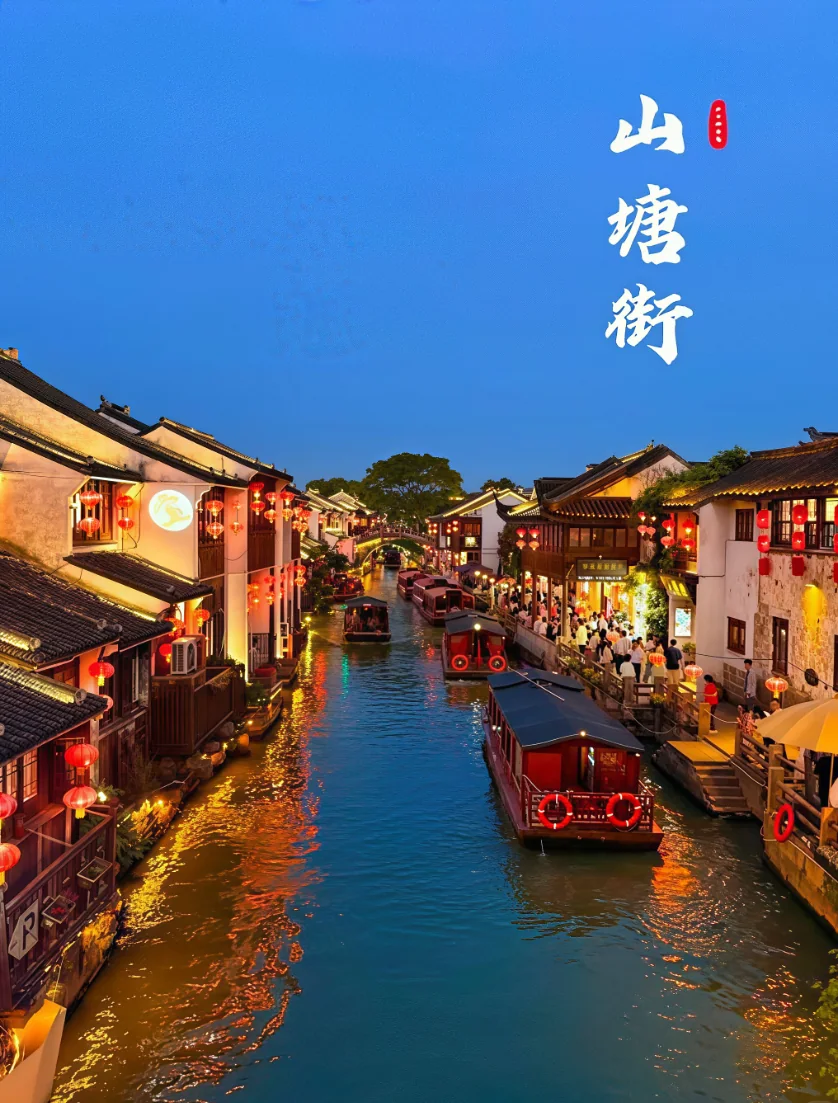
Three local shortcuts most visitors miss:
- Line 6 Zhuozhengyuan Subo Station (Exit 1) is the single most useful stop in Suzhou — it serves the three biggest sights and is a short walk to Pingjiang Road. Build Day 1 around it and ignore blogs that say “Line 4 Beisita Station, 1.1 km away” (that is outdated).
- Gardens sell no on-site tickets. Book timed slots on the official WeChat account “Suzhou Gardens Tourism”; foreign passports should use the “non-mainland-China passport” ticket tier on Trip.com to skip the ID friction.
- Carry a little cash and a translation app. English signage is improving but thin inside gardens; the official audio guide is the reliable fix, and some lane stalls are cash-only.
Day 2 — Where do you go when the core is done? (west gardens or a water town)
| # | Stop | Cost | Getting there |
|---|---|---|---|
| 1 | Tiger Hill (leaning pagoda, “No. 1 sight of Suzhou”) | ¥69-70 (about $10) | Line 6 Tiger Hill Stn, ~400 m |
| 2 | Lingering Garden (one of China’s four great gardens) | ¥55 (about $8) | Line 2 Shilu Stn, ~8 min walk |
| 3 | Master of the Nets Garden evening show (optional, 19:30) | ¥40 (about $6) | Line 5 Nanyuanbeilu Stn |
| 4 | Tongli Water Town (UNESCO, alt. to the above) | ¥80 (about $12) | Line 4 Tongli Stn + bus/DiDi |
How the day flows: If you are staying in Suzhou overnight, spend the morning at Tiger Hill (Line 6) then the Lingering Garden (Line 2 — note it is NOT on Line 6 despite some wrong 2026 blogs) before lunch. Save the Master of the Nets evening performance for after dark. Prefer a water town instead? Take Line 4 to Tongli, walk the Retreat and Reflection Garden, the three bridges and the canal lanes, and return late. Pick one track — doing both burns an hour in transit for nothing.
Three local shortcuts most visitors miss:
- The Lingering Garden is on Line 2 Shilu, not Line 6. A widely copied 2026 post invents a “Lingering Garden West Gate Station” that does not exist — trust the official station list.
- Tongli is the water town to pick because the metro reaches it (Line 4 to Tongli Station, then a short bus/DiDi). Budget the last mile — the shuttle from the station to the old town is where people lose time.
- Suzhou’s metro has rainbow sticky-note aids at many stations showing exactly which exit reaches each sight, and several have English versions — a low-effort lifesaver if your map app lags.
Day 3 — What is the modern side, and when do you skip it? (Jinji Lake)
| # | Stop | Cost | Getting there |
|---|---|---|---|
| 1 | Suzhou Silk Museum (free, closed Mondays) | Free (reserve 3 days ahead) | Line 4 to Suzhou Bonde / taxi |
| 2 | Jinji Lake east shore & Harmony Times Square | Free | Line 1 Dongfangzhimen Stn |
| 3 | Linglong Bay / Jinji Lake west restaurants | Free to walk | Line 1 Culture & Expo Center Stn |
| 4 | Suzhou Industrial Park riverside sunset | Free | Line 1 Culture & Expo Center Stn |
How the day flows: This is the “only if you are staying over” day. Morning at the free Silk Museum, then cross to Jinji Lake — the gleaming opposite of the old town, with the Gate of the Orient and a flat lakeside path. Lunch at a lake-view restaurant (Deyuelou’s Jinji branch faces the water), then a slow afternoon walk and sunset. If you are on a tight Shanghai day trip, drop Day 3 entirely; Days 1-2 already cover the essentials.
Three local shortcuts most visitors miss:
- The lake is free and walkable — you only pay for boats and restaurants. Arrive mid-afternoon for the light and skip the paid observation deck.
- Suzhou has no airport. Fly into Shanghai Hongqiao (SHA) for the 20-25 min train, or Pudong (PVG) with a 2-2.5 h transfer; Wuxi Shuofang (WUX) is the backup portal 40-50 min away.
- Four rail stations, different corners: Suzhou Station (old city, your base), Suzhou North (Beijing HSR, far out), SIP Station (the lake side), Suzhou South (Wujiang/Tongli). Match your hotel to Suzhou Station.
What to eat (and where)
Suzhou food is gentle and slightly sweet — tell staff “less sugar” if you prefer savory. Five solid stops, all reachable by metro:
- Songhelou (1737) — the flagship of Su cuisine on Guanqian Street; order squirrel-shaped mandarin fish and sizzling eel. About ¥150-300 (about $22-44) per person. Metro: Line 4 Chahechang.
- Deyuelou — Ming-dynasty brand; the Jinji Lake branch has the best lake view for a date or anniversary. About ¥120-250 (about $18-36).
- Xinjufeng (1904) — quieter, deeply skilled; famous for boat duck in “mother sauce.” About ¥147 (about $21).
- Zhenzhu Fandian — family-style Su cooking, fast and cheap; squirrel fish and pork belly. About ¥60-100 (about $9-15).
- Tongdexing / Yuxingji noodles — Su-style noodle breakfast: clear broth, firm noodles, seasonal toppings (three-shrimp noodles in early summer). About ¥30-80 (about $4-12).
Practical notes
Every garden needs a timed online reservation — there are no on-site tickets, and the Suzhou Museum sells out 7 days ahead at 09:00. The rest:
- Payments: Alipay and WeChat Pay accept foreign cards after setup; keep some cash for lane stalls. See our payments guide.
- Reservations: Gardens book 3 days ahead on “Suzhou Gardens Tourism”; the museum 7 days; foreign passports use the Trip.com “non-mainland-China passport” tier. A no-show twice in a week blocks booking for 30 days.
- Metro: Set the Alipay transit city to “Suzhou” (not Shanghai) or the gate won’t read your code. Line 6 is the garden line; Line 4 reaches Tongli; Line 2 serves the Lingering Garden.
- Trains: Suzhou Station is your base; Shanghai Hongqiao is 20-25 min, ¥30-39.5 (about $4.50-5.50) second class. See the 12306 train guide.
- Season: Best in March-May and September-November; summer is hot and humid, winter cold but cheap and quiet.
If you need a hotel that accepts foreign passports, see hotels that accept foreign passports, and land with data using the eSIM guide. Pair this with our Shanghai 3-day itinerary — the two are 25 minutes apart by rail — and the Hangzhou 3-day itinerary for the classic Shanghai-Suzhou-Hangzhou line. More on the region via the Shanghai destination page.
Common questions
Can I visit Suzhou as a day trip from Shanghai?
Yes — Suzhou Station is 20-25 minutes by high-speed rail from Shanghai Hongqiao (second class ¥30-39.5), so a same-day round trip is easy; stay 2-3 days to also add a water town like Tongli.
Do Suzhou gardens need advance booking?
Yes — there are no on-site tickets. Book timed slots on the official 'Suzhou Gardens Tourism' WeChat account; foreign passports should use the Trip.com 'non-mainland-China passport' ticket tier.
Which metro line serves the gardens?
Line 6, the 'garden line.' Zhuozhengyuan Subo Station (Exit 1) serves the Humble Administrator's Garden, Suzhou Museum and Lion Grove; Tiger Hill also has its own Line 6 station.
How do I visit the Suzhou Museum?
It is free but must be reserved, with slots released 7 days ahead at 09:00, and it is closed Mondays. The I.M. Pei building sits next to the Humble Administrator's Garden, so pair the two.
Does Suzhou have an airport?
No. Fly into Shanghai Hongqiao (20-25 min by train), Shanghai Pudong (2-2.5h) or Wuxi Shuofang (40-50 min); among its four rail stations, Suzhou Station is closest to the old city.
Is Suzhou food very sweet?
It is gentle and slightly sweet next to Sichuan or Hunan; ask for 'less sugar' if you prefer savory. Signatures include squirrel-shaped mandarin fish and Su-style noodles.
Sources
- Classical Gardens of Suzhou — UNESCO World Heritage Centre — official · accessed 2026-10-26
- 12306 — official China Railway ticketing platform — operator · accessed 2026-10-26