What Can You Do in Taiyuan in 3 Days?
Published 2026-09-24 · Updated 2026-10-26 · Itineraries
TL;DR
A: Three days fits Taiyuan: Day 1 Shanxi Museum and the city temples (Pure Yang Hall, the former provincial governor's compound), Day 2 Jinci Temple and Tianlong Mountain or Mengshan, Day 3 a Pingyao half-day (30-50 min by rail). Metro Line 1 now runs straight to Wusu Airport and Taiyuan South; Jinci has no metro so take bus 804/856 or a taxi. The Northern Qi mural museum charges ¥35 since Sept 1, 2026.
What’s the short answer?
Taiyuan is Shanxi’s 2,500-year-old capital and the springboard for the province’s ancient-town and Buddhist-mountain trail — but the city itself rewards two solid days. Three days here covers Shanxi Museum’s Jin bronzes, Jinci (China’s oldest surviving royal ancestral-temple garden), the Ming twin pagodas, and still leaves a half-day for Pingyao, the walled town 30-50 minutes away by high-speed rail. It is a noodle-and-mature-vinegar city best taken slowly.
Why does this Taiyuan route work?
Taiyuan’s museums and old-town temples sit on Lines 1 and 2 in the center; Jinci is a bus-or-taxi ride southwest; Pingyao is a short rail hop. So:
- Day 1 stays in the city — Shanxi Museum, Pure Yang Hall, the former governor’s compound, twin pagodas at sunset.
- Day 2 goes southwest to Jinci and a cliff site (Tianlong Mountain or Mengshan).
- Day 3 rides the rail to Pingyao for a half-day behind the walls, then returns.
Day 1 — What is the city museum-and-temple loop? (center on Lines 1-2)
| # | Stop | Cost | Getting there |
|---|---|---|---|
| 1 | Shanxi Museum (Jin bronzes, Northern Dynasties murals) | Free, book ahead | Bus 69 from Nanzhonghuan Stn (L2) or taxi |
| 2 | Pure Yang Hall (Shanxi architecture museum) | ¥30 (about $4) | Kaihuasi Stn (L2) |
| 3 | Former Shanxi Merchant compound | Free, book ahead | Walk from Kaihuasi / Damenmen (L1/L2) |
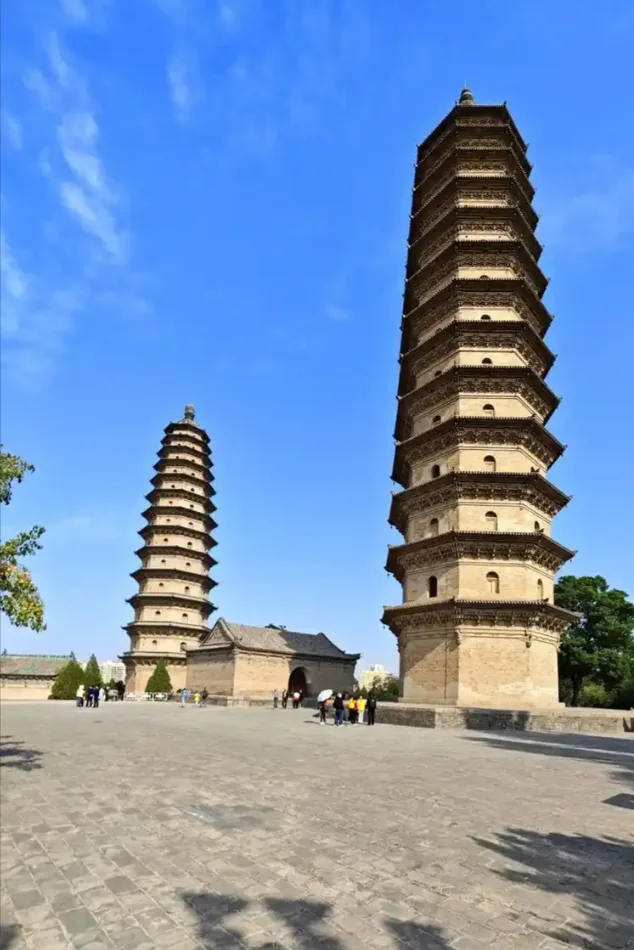
| 4 | Twin Pagoda Temple (Yongzuo) | ¥30 (about $4) | Twin Pagoda Stn (L1) |
How the day flows: Reach Shanxi Museum at the 09:00 opening (free, book 1-7 days ahead, closed Mondays) for the bird-shaped bronze zun and the Northern Dynasties murals. Lunch on knife-cut noodles near Liuxiang, then metro to Pure Yang Hall and the former governor’s compound. End at the Twin Pagoda Temple for the sunset over the Ming pagodas — April-May brings the famous peony bloom.
Three local shortcuts most visitors miss:
- Shanxi Museum has no metro door — the nearest is Nanzhonghuan (Line 2) then bus 69, or just taxi; don’t trust blogs that name a “museum station.”
- Line 1 — not Line 2 — reaches the airport — Wusu Airport Station opened Feb 2025 on Line 1; old guides saying “Line 2 to the airport” are wrong.
- Book the museum, not the pagoda, first — Shanxi Museum closes Mondays and sells out of slots; the pagodas take walk-ups.
Day 2 — How do you reach Jinci Temple? (southwest, no metro)
| # | Stop | Cost | Getting there |
|---|---|---|---|
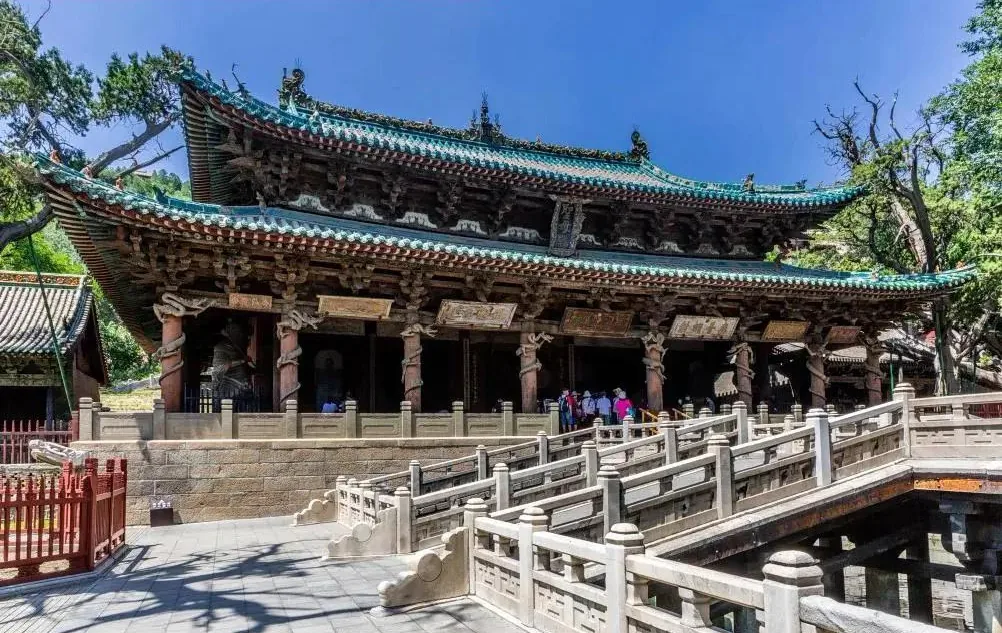
| 1 | Jinci Temple (oldest royal ancestral garden) | ¥80 (about $11) | Bus 804/856/308 or taxi, ~40 min |
| 2 | Jinci Park (free stroll) | Free | Same stop |
| 3 | Tianlong Mountain grottoes OR Mengshan Buddha | ¥50 (about $7) | Bus 308 + shuttle, or taxi |
How the day flows: Go early to Jinci (opens 08:30) — the Hall of Holy Mother, the flying beams and the eternal spring are the draws, and morning light is best. After lunch in the park, choose Tianlong Mountain’s cliff grottoes or the giant Mengshan seated Buddha; both need bus-plus-taxi as there is no metro. Return to the food streets for dinner.
Three local shortcuts most visitors miss:
- Jinci has no metro — bus 804/856 from the city or a ~¥80 (about $11) taxi; book on the “China Jinci” official account.
- The Northern Qi Mural Museum now costs ¥35 — it went paid on Sept 1, 2026 (was free); book ahead, closed Mondays. It is the single best fix to old “free” advice.
- Tounao soup is winter-only — this eight-treasure breakfast runs only from White Dew to Start of Spring (~06:30-09:00); summer visitors won’t find it, so switch to yangza ge (mutton offal soup) and wantuo.
Day 3 — Can you do Pingyao as a half-day? (high-speed west)
| # | Stop | Cost | Getting there |
|---|---|---|---|
| 1 | Taiyuan South to Pingyao Ancient City | HSR ¥28-35 (about $4-5) | Taiyuan South Stn (L1) |
| 2 | Pingyao wall + Rishengchang (first draft bank) | ¥125 (about $17) combo | Walk inside the walled town |
| 3 | Return to Taiyuan | Same HSR fare | Pingyao Ancient City Stn, evening trains |
How the day flows: Take an early high-speed train from Taiyuan South to Pingyao Ancient City (reported 30-50 minutes), walk the Ming wall and Rishengchang (China’s first draft bank), lunch inside the town, and train back to Taiyuan by mid-afternoon. It is a long but doable half-day; stay in Pingyao itself if you want the lantern-lit night instead.
Three local shortcuts most visitors miss:
- Pingyao is a day trip, not an overnight here — this itinerary returns to Taiyuan; if you want the famous night scene, shift Day 3 to a Pingyao hotel and skip the return.
- Taiyuan South is your HSR hub — high-speed to Beijing (~2.5 h), Xi’an (~3 h) and Shijiazhuang (~1h20m) all leave here; Line 1 reaches it and the airport.
- Confirm the Pingyao train time before you fly — the 30-50 min window is the reported range; check 12306 the morning of, as departures shift seasonally.
Why is Taiyuan suddenly on gamers’ maps? (Black Myth: Wukong)
The game scanned 36 real locations nationwide and 27 sit in Shanxi — and Taiyuan is the rail hub that strings them together. Shanxi holds 531 nationally protected heritage sites, China’s densest run of pre-Ming timber architecture, and the province’s official “Follow Wukong around Shanxi” route strings them for you. You meet the trail without leaving this itinerary: Day 3’s Pingyao half-day sits next to Shuanglin Temple and Zhenguo Temple — UNESCO-listed together with the old town, and both Wukong scanning locations. With a fourth day, the flagship is Xiaoxitian in Xi County (Linfen, a rail run south from Taiyuan South): one small hall packed with thousands of Ming suspended sculptures, the model for the game’s finale (¥35, real-name booking, timed entry). The Datong end anchors Yungang Grottoes and the Yingxian Wooden Pagoda — a separate northern loop.
What to eat in Taiyuan (and where)
Taiyuan is the capital of knife-cut noodles and mature vinegar. Five stops:
- Knife-cut noodles (dao xiao mian) — Shanxi’s top noodle, silky inside, with aged vinegar; Shunliu or Zhao Laogi, about ¥15-25 (about $2-3.50) a bowl.
- Tounao (eight-treasure soup) — a Fu Shan medicinal breakfast of mutton, yam and rice wine; Qing He Yuan on Food Street, about ¥35-54 (about $5-8). Winter only.
- Yangza ge (mutton offal soup) — milky bone broth with vermicelli; Hao Ganggang on Liuxiang (opens 05:00), about ¥25-35 (about $3.50-5).
- Guo you rou (fried pork) — the “first taste of Jin,” pork with black fungus and vinegar; Lin Xiang Zhai, about ¥45-70 (about $6-10).
- Liujiazhai braised pork — since the Qianlong era, vacuum-packed for souvenirs; Liuxiang, about ¥80 (about $11) per jin.
Souvenirs: Ninghua Fu mature vinegar gift boxes, Liujiazhai braised pork and Shuang He Cheng mooncakes. Avoid “Shanxi specialty” shops by the sights — buy at the old-brand stores or a supermarket. Most shops take Alipay; keep a little cash for breakfast lanes.
Practical notes
Taiyuan’s center is metro-easy, but Jinci and the cliff sites need bus or taxi — and Line 1, not Line 2, is your airport line. The rest:
- Payments: Alipay and WeChat Pay both accept foreign cards after in-app setup; breakfast lanes prefer cash. See our payments guide.
- Metro: Lines 1 and 2 cross only at Damenmen; Line 1 (opened Feb 2025) reaches Wusu Airport, Taiyuan Station and Taiyuan South. Use the Alipay transit code set to “Taiyuan.”
- Rail: Taiyuan South for high-speed (Beijing, Xi’an, Shijiazhuang, Pingyao); Taiyuan Station for regular trains. Don’t buy a ticket to Taiyuan West — it is freight-heavy and useless for tourists.
- Reservations: Shanxi Museum and Jinci book on official accounts; the Northern Qi Mural Museum (¥35) and the former governor’s compound need pre-booking. Foreign passports use the passport number.
- Best season: April-May (twin-pagoda peonies) and Sept-Oct; summer is hot, winter dry and cold but the tounao soup season.
More on the city: the Taiyuan destination page. Taiyuan sits about 2.5 hours from Beijing by high-speed rail — pair it with the Beijing 5-day itinerary if you head north. For train tickets, see the 12306 train guide; for payments, the payments guide. If you need a hotel that accepts foreign passports, see hotels that accept foreign passports, and land with data using the eSIM guide.
Common questions
Which Taiyuan metro line goes to the airport?
Line 1 (opened Feb 2025) — Wusu Airport Station runs straight to the terminals, Taiyuan Station and Taiyuan South. Old guides saying 'Line 2 to the airport' are wrong.
How do I get to Jinci Temple?
Jinci has no metro. Take bus 804/856/308 or a taxi (~40 min, about ¥80 / $11) from the city, and book on the 'China Jinci' official account. Go early — it opens at 08:30.
Is the Northern Qi Mural Museum free?
No — it went paid on Sept 1, 2026 at ¥35 (about $5) and needs advance booking; it is closed Mondays. Many 2026 guides still list it as free, which is now outdated.
Can I do Pingyao as a half-day from Taiyuan?
Yes — high-speed from Taiyuan South to Pingyao Ancient City takes a reported 30-50 minutes; walk the wall and Rishengchang, then train back by mid-afternoon. Stay in Pingyao itself if you want the night scene.
What are Taiyuan's must-eat noodles?
Knife-cut noodles (dao xiao mian) with aged vinegar are the star — about ¥15-25 (about $2-3.50) a bowl at Shunliu or Zhao Laogi. Add tounao soup in winter, yangza ge offal soup in summer.
When is the best time to visit Taiyuan?
April-May (twin-pagoda peonies) and Sept-Oct. Summer is hot; winter is dry and cold but the tounao soup season runs only from White Dew to Start of Spring.
Sources
- 12306 — official China Railway ticketing platform — operator · accessed 2026-10-26
- Ancient City of Pingyao — UNESCO World Heritage Centre — official · accessed 2026-10-26
- Black Myth: Wukong puts Shanxi's ancient architecture in the spotlight — ECNS — secondary · accessed 2026-10-26